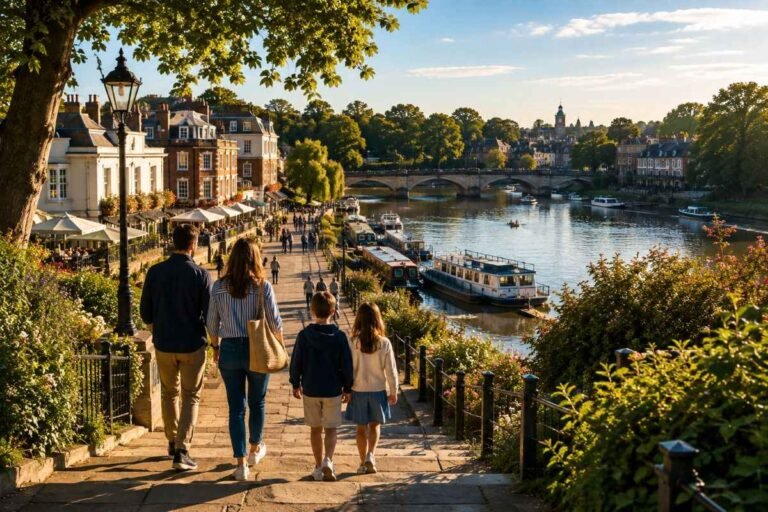
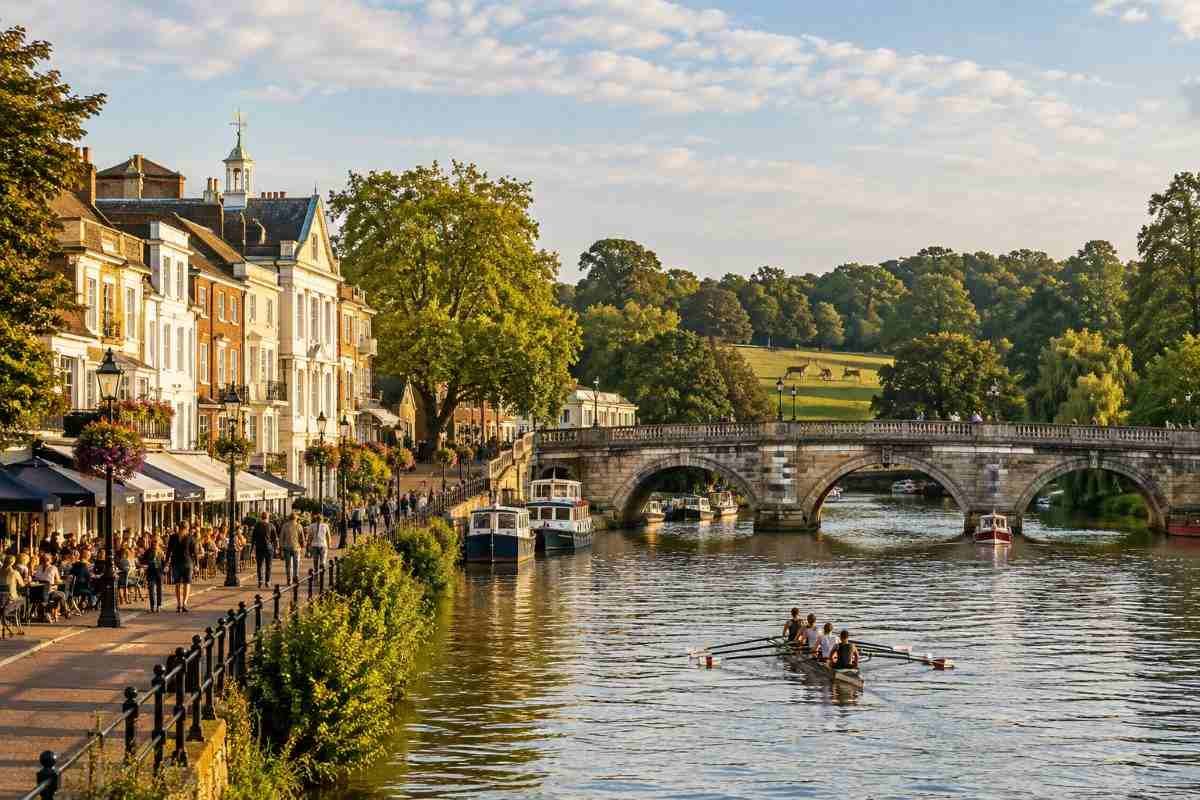
Richmond is one of those parts of London that manages to feel both connected to the capital and comfortably removed from its pace. Sitting on a sweeping stretch of the River Thames in south-west London, it combines historic streets, expansive green spaces and a lively town centre with straightforward rail and Underground connections into central London.
This Area Guide to Richmond explores what makes the area distinctive, from its history and transport links to its neighbourhoods, shopping streets and everyday amenities. Whether you’re considering a move, planning a visit or simply want to learn more about this corner of London, understanding how Richmond is laid out—and what life is really like here—helps paint a clearer picture than property listings or travel brochures alone.
Unlike many London districts that have been reshaped by modern development, Richmond has retained much of its historic character. Grand Georgian terraces overlook the Thames, independent cafés sit alongside familiar high street brands, and Richmond Park remains one of the capital’s most remarkable open spaces. These features have made the area popular with families, professionals, retirees and visitors alike.
The sections below look at how Richmond has developed, what each neighbourhood offers and why it continues to rank among London’s most sought-after places to live.
Richmond at a Glance
| Feature | Details |
| London Borough | Richmond upon Thames |
| Region | South-West London |
| River | River Thames |
| Main Station | Richmond Station |
| Underground Line | District line |
| Rail Operator | South Western Railway |
| Overground | London Overground |
| Famous Green Space | Richmond Park |
| Nearby Areas | Kew, Twickenham, East Sheen, Ham, Mortlake, St Margarets |
| Known For | Royal parks, riverside walks, historic town centre, independent shops |
Quick Summary
Richmond is best known for:
- Richmond Park and its free-roaming deer
- Scenic stretches of the River Thames
- Excellent transport into Central London
- Historic architecture
- Highly regarded schools
- Attractive shopping streets
- Strong café and restaurant scene
- Outdoor recreation and riverside living
The History and Character of Richmond
Richmond’s history stretches back many centuries, but its transformation into one of London’s most desirable residential districts began during the Tudor period. The area gained royal favour after King Henry VII renamed the settlement “Richmond” in the early 16th century, taking inspiration from his title, the Earl of Richmond.
Royal connections continued through subsequent centuries, helping shape the area’s identity. Although the original Richmond Palace no longer survives beyond a handful of remains, its presence established Richmond as a destination associated with wealth, leisure and landscaped surroundings.
The arrival of the railway during the nineteenth century made Richmond significantly more accessible from central London. Improved transport encouraged residential growth while allowing much of the surrounding landscape to remain protected. This balance between urban development and preserved green space continues to define Richmond today.
Walking through the town centre reveals layers of architectural history. Georgian townhouses sit alongside Victorian commercial buildings, while narrow lanes lead towards the Thames, where pubs, cafés and public spaces create an active riverside atmosphere throughout the year.
Richmond has long attracted artists, writers and public figures who valued its quieter environment while remaining within easy reach of Westminster and the West End. Today the area maintains that balance between city convenience and suburban calm.
Transport and Connectivity
One reason Richmond consistently appeals to commuters is the variety of transport options available.
Rail Services
Richmond Station provides regular South Western Railway services towards London Waterloo, making journeys into central London relatively straightforward. Trains also connect with destinations across Surrey and neighbouring parts of south-west London.
Frequent services make Richmond practical for commuters while also benefiting visitors exploring the area.
London Underground
Richmond forms the western terminus of the District line.
Direct Underground services provide connections through west and central London, including areas such as:
- Hammersmith
- Earl’s Court
- South Kensington
- Victoria (via interchange)
- Westminster (via interchange)
- Tower Hill
Although journey times vary depending on the service, Richmond benefits from avoiding many of the busiest central stations during peak periods.
London Overground
The London Overground links Richmond with destinations including:
- Kew Gardens
- Gunnersbury
- Acton Central
- Willesden Junction
- Highbury & Islington
These services improve east-west travel without requiring a journey through central London.
Road Connections
Drivers can access several major routes nearby, including:
- A316
- A205 South Circular
- M3 (via A316)
- M25 (further south-west)
Road congestion can be significant during peak hours, particularly around Richmond Circus and the approaches to Richmond Bridge.
Cycling and Walking
Richmond is well suited to active travel.
Popular walking and cycling routes include:
- The Thames Path
- Richmond Green
- Richmond Park
- Old Deer Park
- Kew Gardens approach roads
Cyclists benefit from quieter residential streets away from the town centre, although some hills can make routes more demanding than flatter parts of London.
Richmond’s Neighbourhoods
Richmond is more varied than many visitors initially realise. Each surrounding neighbourhood has its own character and appeal.
Richmond Town Centre
The town centre forms the commercial heart of the borough.
Here you’ll find:
- National retailers
- Independent boutiques
- Restaurants
- Cafés
- Richmond Theatre
- Historic pubs
- Riverside dining
The area is busiest around George Street, Hill Street and The Quadrant.
Residents appreciate being able to reach shops, transport and entertainment on foot.
Richmond Riverside
The riverside remains one of London’s most attractive public spaces.
Its broad promenade overlooks the Thames and attracts walkers, runners, cyclists and visitors throughout the year.
Restaurants and cafés spill onto outdoor terraces during warmer months, while boat trips and rowing activity add to the atmosphere.
Richmond Bridge, completed in the eighteenth century, remains London’s oldest surviving Thames bridge still carrying road traffic.
East Sheen
East Sheen offers a quieter residential environment while remaining close to Richmond town centre.
It is known for:
- Family housing
- Independent shops
- Local cafés
- Good access to Richmond Park
- Strong community feel
Many families choose East Sheen because it balances suburban streets with convenient transport links.
Ham
Ham lies between Richmond and Kingston upon Thames.
Compared with the town centre, it feels noticeably more rural.
Highlights include:
- Ham House
- Riverside walks
- Woodland
- Local parks
- Larger residential properties
Its quieter character appeals to residents seeking more space while remaining within Greater London.
Kew
Although famous internationally for the Royal Botanic Gardens, Kew also functions as an attractive residential neighbourhood.
Residents benefit from:
- Village-style shopping streets
- Independent cafés
- Green surroundings
- District line connections
- Access to the Thames
The area retains a relaxed atmosphere despite its popularity with visitors.
Mortlake
Located east of Richmond, Mortlake combines riverside housing with growing residential development.
The area has long associations with rowing and the historic University Boat Race.
Its improving transport links and ongoing regeneration continue to attract buyers seeking alternatives to Richmond town centre.
Shopping and Everyday Amenities
Richmond offers a mix of independent businesses, national retailers and specialist shops, giving residents access to both everyday essentials and higher-end shopping without travelling into central London.
George Street
George Street forms one of Richmond’s principal shopping thoroughfares. Here you’ll find a blend of fashion retailers, cafés, restaurants and service businesses that cater to both locals and visitors. Its pedestrian-friendly layout makes it a popular destination throughout the week.
Hill Street
Running between Richmond Green and the town centre, Hill Street is home to a variety of independent boutiques, delicatessens, gift shops and cafés. The street’s smaller scale gives it a distinctly local character compared with larger retail centres elsewhere in London.
The Quadrant
The Quadrant links Richmond Station with the town centre and includes supermarkets, convenience stores, banks and a range of everyday services. Its location makes it one of the busiest parts of Richmond, particularly during commuting hours.
Richmond Green
Richmond Green provides more than open space; the surrounding streets feature traditional pubs, restaurants and small independent businesses. The Green often hosts informal gatherings and seasonal events, reinforcing its role as a focal point for the local community.
Everyday Services
Residents have access to a broad range of facilities, including:
- Supermarkets and food shops
- Pharmacies
- GP surgeries and dental practices
- Banks and building societies
- Fitness centres and gyms
- Public libraries
- Beauty and wellness services
- Professional services such as solicitors and estate agents
Most day-to-day errands can be completed within walking distance of the town centre, while neighbouring districts such as East Sheen, Kew and Twickenham provide additional shopping and services.
Parks and Green Spaces
One of Richmond’s defining features is the amount of open space it offers. While much of London has become increasingly built up, Richmond has retained large areas of protected parkland, woodland and riverside walks. These spaces shape everyday life, providing room for exercise, wildlife and recreation within easy reach of the town centre.
Richmond Park
Richmond Park is the largest of London’s Royal Parks, covering around 2,500 acres. Created as a deer park by King Charles I in the 17th century, it remains home to hundreds of free-roaming red and fallow deer.
Visitors come throughout the year to enjoy:
- Walking and running trails
- Cycling routes
- Horse riding
- Woodland and grassland habitats
- Scenic viewpoints
- Wildlife photography
One of the park’s best-known viewpoints is King Henry’s Mound, where a protected viewing corridor offers a rare, uninterrupted line of sight to St Paul’s Cathedral, more than 10 miles away.
Richmond Park is also recognised as a Site of Special Scientific Interest (SSSI) and a National Nature Reserve, reflecting its ecological importance.
Old Deer Park
Despite its name, Old Deer Park is separate from Richmond Park and lies closer to the town centre. It offers a wide range of sporting and leisure facilities, including:
- Cricket pitches
- Rugby grounds
- Tennis courts
- Open playing fields
- Children’s play areas
- Walking paths
The park is popular with local sports clubs as well as residents looking for open space without venturing into the larger Royal Park.
Richmond Green
Richmond Green has been at the heart of the town for centuries. Surrounded by historic buildings, independent cafés and traditional pubs, it remains a well-used public space for relaxation, informal sports and community events.
The Green also sits beside Richmond Theatre, making it a pleasant place to spend time before or after a performance.
Terrace Gardens
Between Richmond town centre and the River Thames, Terrace Gardens offers landscaped lawns, ornamental planting and elevated views across the river.
Its quieter atmosphere makes it popular with visitors seeking a peaceful break from the busier shopping streets.
Thames Path
The Thames Path National Trail passes through Richmond, providing miles of riverside walking in both directions.
Popular routes include:
- Richmond to Twickenham
- Richmond to Kew
- Richmond to Kingston upon Thames
The path is suitable for walkers, runners and cyclists, with regular cafés and riverside pubs along the route.
Schools and Education
Richmond has built a strong reputation for education, which is one reason it remains attractive to families.
The borough contains a mix of:
- State primary schools
- Secondary schools
- Independent schools
- Sixth-form colleges
- Special educational provision
Several schools in the wider Richmond upon Thames borough have received strong inspection outcomes in recent years, although ratings can change over time. Families should always check the latest inspection reports and admissions criteria before making decisions.
Higher Education Nearby
While Richmond itself is not a major university town, students benefit from access to several institutions within reasonable travelling distance, including universities in central and west London.
Richmond’s transport links make commuting practical for many students.
Healthcare
Residents have access to a broad range of healthcare services across Richmond and the surrounding borough.
Available services include:
- GP practices
- NHS dental surgeries
- Community pharmacies
- Physiotherapy clinics
- Opticians
- Mental health services
- Private medical clinics
For hospital care, residents are served by several major NHS hospitals in neighbouring areas, including facilities in Kingston, Isleworth and Tooting.
Healthcare provision continues to develop alongside population growth, and patients should check NHS resources for the latest information on available services and waiting times.
Restaurants, Cafés and Pubs
Richmond’s food scene reflects its position as both a residential area and a popular visitor destination.
The town centre and riverside offer everything from independent coffee shops to established restaurants, while quieter residential streets feature neighbourhood cafés and traditional pubs.
Riverside Dining
The Thames waterfront is one of Richmond’s biggest attractions for diners.
Many restaurants take advantage of river views, particularly during spring and summer, when outdoor seating becomes especially popular.
Cuisine ranges widely, including:
- British
- Italian
- French
- Indian
- Japanese
- Thai
- Mediterranean
- Modern European
Independent Cafés
Richmond has a thriving independent café culture.
You’ll find venues specialising in:
- Artisan coffee
- Fresh pastries
- Brunch
- Homemade cakes
- Light lunches
Many cafés also cater for remote workers during quieter weekday periods.
Traditional Pubs
Historic pubs remain an important part of Richmond’s character.
Many date back centuries and offer:
- Riverside beer gardens
- Seasonal menus
- Sunday roasts
- Local ales
- Family-friendly dining
Several occupy listed buildings that add to the area’s historic atmosphere.
Shopping Beyond the High Street
While George Street and Hill Street remain the main retail areas, Richmond’s shopping extends into surrounding streets where visitors will find:
- Independent bookshops
- Homeware stores
- Art galleries
- Fashion boutiques
- Delicatessens
- Wine merchants
- Florists
- Specialist food retailers
This balance between national chains and local businesses helps Richmond retain its distinctive identity.
Property Market
Richmond consistently ranks among London’s more expensive residential locations.
Prices reflect several factors:
- Large amounts of protected green space
- Excellent transport links
- Strong schools
- Historic architecture
- Riverside setting
- High demand
- Limited development opportunities
Types of Housing
Housing varies considerably across the area.
Common property types include:
| Property Type | Typical Areas |
| Georgian townhouses | Richmond town centre |
| Victorian terraces | East Sheen, Mortlake |
| Edwardian family homes | East Sheen |
| Riverside apartments | Richmond riverside |
| Modern developments | Parts of Kew and Mortlake |
| Detached houses | Ham and outer Richmond |
Because much of Richmond falls within conservation areas, redevelopment is often more carefully managed than in other parts of London.
This has helped preserve much of the area’s architectural character.
Employment and Local Economy
Although many residents commute into central London, Richmond also supports a diverse local economy.
Key employment sectors include:
- Retail
- Hospitality
- Professional services
- Education
- Healthcare
- Tourism
- Property
- Financial services
The town centre provides office space for small and medium-sized businesses, while independent retailers contribute significantly to the local economy.
Tourism also plays an important role, driven by attractions such as Richmond Park, the Thames, Richmond Theatre and nearby Kew Gardens.
Community and Lifestyle
Richmond attracts a broad mix of residents.
These include:
- Families
- Young professionals
- Retirees
- International residents
- Students
- Long-term Londoners
The pace of life generally feels calmer than many inner London districts.
Residents often describe Richmond as offering a balance between city convenience and access to nature.
Community events, outdoor markets, sporting activities and arts venues contribute to an active local calendar throughout the year.
Safety and Living Environment
As with any London district, crime levels vary by neighbourhood and offence type. Richmond upon Thames has historically recorded lower overall crime rates than many inner London boroughs, although no area is entirely free from crime.
Prospective residents should review the latest Metropolitan Police crime data for specific neighbourhoods if safety is a key consideration.
Other factors that contribute to Richmond’s quality of life include:
- Well-maintained public spaces
- Extensive parkland
- Good walking routes
- Active local community groups
- Strong environmental protections
- A relatively clean town centre
Pros and Cons of Living in Richmond
| Pros | Cons |
| Excellent transport links | Higher property prices |
| Richmond Park on the doorstep | Expensive rental market |
| Attractive riverside setting | Busy town centre at weekends |
| Highly regarded schools | Traffic congestion during peak hours |
| Wide choice of cafés and restaurants | Limited parking in central areas |
| Historic character | Competition for housing |
| Strong sense of community | Some commuter services can become crowded |
Things to Do in Richmond
Richmond offers plenty to explore, whether you’re spending a few hours in the area or planning a longer stay. Much of its appeal comes from being able to combine outdoor activities with culture, shopping and dining without travelling far.
Walk Along the River Thames
The stretch of the Thames through Richmond is one of the most picturesque in London. The riverside promenade is lined with cafés, pubs and benches overlooking the water, making it a popular place for a leisurely walk.
Boat trips operate seasonally, while rowing clubs and pleasure boats are a familiar sight throughout the year.
Visit Richmond Park
Richmond Park is the area’s best-known attraction and rewards repeat visits. Beyond its famous deer, visitors can explore ancient woodland, grassland, ponds and miles of walking and cycling routes.
The park is especially attractive in spring when wildflowers bloom, autumn when the woodland changes colour, and during quieter weekday mornings.
Explore Richmond Green
Richmond Green remains a focal point for local life. It is an ideal place to relax with a coffee, enjoy a picnic or simply watch everyday life unfold.
Historic buildings surrounding the Green add to its charm, while its proximity to the town centre makes it an easy stop during a visit.
Watch a Performance at Richmond Theatre
Richmond Theatre has been entertaining audiences since the late nineteenth century. Its programme includes touring West End productions, comedy, drama, musicals, family shows and seasonal performances.
The theatre continues to play an important role in Richmond’s cultural life.
Visit the Royal Botanic Gardens, Kew
Just east of Richmond, the Royal Botanic Gardens, Kew is one of the world’s leading botanical gardens and a UNESCO World Heritage Site. Visitors can explore glasshouses, landscaped gardens, treetop walkways and internationally significant plant collections.
Although technically located in neighbouring Kew, it is easily reached from Richmond and is one of the area’s most popular attractions.
Explore Ham House
Managed by the National Trust, Ham House is one of Britain’s best-preserved seventeenth-century houses. Visitors can tour its historic interiors, formal gardens and riverside grounds while learning about its role in English history.
Richmond Compared with Nearby Areas
Choosing where to live or spend time often means comparing neighbouring districts. The table below highlights some key differences.
| Area | Best Known For | Suitable For | Atmosphere |
| Richmond | Thames, Richmond Park, shopping | Families, professionals, visitors | Historic and lively |
| Kew | Botanical gardens, village feel | Families, commuters | Quiet and leafy |
| Twickenham | Rugby, riverside, community | Families and sports fans | Relaxed |
| East Sheen | Residential streets, schools | Families | Peaceful |
| Mortlake | Riverside housing, rowing heritage | Professionals | Residential |
| Kingston upon Thames | Larger shopping centre, university | Students, shoppers | Busy town centre |
Is Richmond Right for You?
Richmond appeals to a wide range of people, but it may suit some lifestyles more than others.
Richmond could be a good choice if you:
- Value access to parks and green space.
- Need reliable public transport into central London.
- Enjoy walking, cycling or outdoor activities.
- Prefer a town centre with a mix of independent and national retailers.
- Appreciate historic surroundings and riverside scenery.
- Are looking for a family-friendly environment with a broad choice of schools.
You may want to consider other areas if you:
- Are working with a limited housing budget.
- Prefer a faster-paced nightlife scene.
- Need frequent access to London’s financial districts outside standard commuting routes.
- Require extensive on-street parking close to the town centre.
Practical Tips for Visitors
If you’re visiting Richmond for the first time, a little planning can help you make the most of your day.
- Arrive by public transport. Richmond Station is well connected by National Rail, the District line and London Overground, and parking in the town centre can be limited.
- Wear comfortable footwear. Richmond Park and the Thames Path involve plenty of walking, often on uneven or unpaved paths.
- Allow time for the riverside. Many visitors underestimate how enjoyable it is to stroll along the Thames and stop at one of the cafés or pubs.
- Respect wildlife. If visiting Richmond Park, keep a safe distance from the deer and avoid feeding them.
- Visit during weekdays if possible. Popular attractions and shopping streets are generally quieter outside weekends and public holidays.
Richmond at a glance:
- Location: South-west London, within the London Borough of Richmond upon Thames.
- Best known for: Richmond Park, the River Thames, historic town centre and strong transport links.
- Transport: National Rail, District line and London Overground services from Richmond Station.
- Green spaces: Richmond Park, Old Deer Park, Richmond Green and the Thames Path.
- Shopping and dining: A mix of independent businesses, restaurants, cafés and national retailers.
- Property: A wide range of period homes, modern apartments and family houses, with prices reflecting high demand.
- Who it’s suited to: Families, professionals, commuters and anyone seeking easy access to nature without leaving London.
Frequently Asked Questions
1. Where is Richmond in London?
Richmond is in south-west London within the London Borough of Richmond upon Thames. It sits on the River Thames and is well connected to central London by rail, Underground and London Overground services.
2. Is Richmond a good place to live?
Many people consider Richmond an attractive place to live because of its extensive green spaces, good transport links, highly regarded schools and historic character. Housing costs, however, are generally higher than the London average.
3. How do you get to Richmond?
Richmond Station is served by South Western Railway, the District line and the London Overground. The area is also accessible by road via the A316 and nearby South Circular routes.
4. What is Richmond Park famous for?
Richmond Park is famous for its free-roaming red and fallow deer, ancient woodland, cycling routes and protected viewpoints, including King Henry’s Mound.
5. Is Richmond good for families?
Yes. Richmond is popular with families thanks to its parks, outdoor recreation, community facilities and broad range of schools.
6. Can you walk along the River Thames in Richmond?
Yes. The Thames Path passes through Richmond, offering scenic walking routes towards Kew, Twickenham and Kingston upon Thames.
7. Is Richmond expensive?
Richmond is generally one of London’s more expensive residential areas. Property values and rental prices reflect strong demand, attractive surroundings and excellent transport connections.
8. What are the best places to visit near Richmond?
Nearby attractions include the Royal Botanic Gardens, Kew, Ham House, Twickenham, Syon House, Marble Hill House and Bushy Park.
Final Thoughts
Richmond has earned its reputation as one of London’s most desirable districts by offering a rare combination of historic character, excellent transport links and extensive green space. From the sweeping landscapes of Richmond Park to the lively cafés along the Thames, the area provides an appealing balance between urban convenience and outdoor living.
For prospective residents, it’s worth exploring different neighbourhoods—from the riverside and town centre to East Sheen, Ham and nearby Kew—to find the setting that best suits your lifestyle and budget. Visitors, meanwhile, can easily fill a day with riverside walks, cultural attractions and independent shopping before venturing further into south-west London.
Whether you’re researching a future move or planning your next day out, Richmond rewards a slower pace of exploration. Taking time to wander its streets, parks and riverbanks is often the best way to appreciate what makes this part of London stand out.