
A leaking pipe rarely arrives at a convenient moment. A dripping tap can waste water for weeks, while a broken boiler or burst pipe can quickly become an expensive emergency. Finding a dependable plumber before something goes wrong can save both time and money, particularly in a city like Edinburgh, where homes range from centuries-old Georgian townhouses to newly built apartments with very different plumbing systems.
If you’re searching for the best plumbers in Edinburgh, you’ll find plenty of companies advertising similar services. The challenge is knowing which businesses have the right experience, qualifications and customer service for your particular job. Some specialise in emergency repairs, while others focus on bathroom installations, boiler work or long-term maintenance.
This guide explains what professional plumbers do, how to compare local companies, what you can expect to pay, and the questions worth asking before booking an appointment. Whether you’re dealing with an urgent leak or planning a home renovation, the information below will help you make a confident and informed decision.
Why Choosing the Right Plumber Matters
Many plumbing issues appear minor at first but become significantly more expensive if ignored. A slow leak hidden beneath flooring can damage timber, insulation and plaster long before it becomes visible. Similarly, poor-quality installation work can lead to recurring problems that require further repairs.
Hiring an experienced plumber offers several advantages:
- Correct diagnosis of the underlying issue
- Safe repairs that comply with current regulations
- High-quality materials and workmanship
- Reduced risk of repeat failures
- Professional advice on preventing future problems
For homeowners, landlords and businesses alike, choosing a reputable local professional is usually far more cost-effective than relying on temporary fixes.
What Services Do Edinburgh Plumbers Typically Offer?
Most established plumbing companies provide far more than emergency leak repairs. Many offer complete installation, maintenance and renovation services for both residential and commercial properties.
General Plumbing Repairs
Routine plumbing jobs include:
- Repairing leaking pipes
- Fixing dripping taps
- Replacing faulty toilets
- Repairing burst water pipes
- Clearing blocked sinks
- Fixing water pressure issues
- Replacing valves and pipe fittings
These are among the most common reasons homeowners contact a plumber.
Emergency Plumbing Services
Some plumbing companies operate 24 hours a day for urgent problems such as:
- Burst pipes
- Major leaks
- Overflowing toilets
- Water tank failures
- Loss of water supply
- Severe drainage issues
Emergency plumbers aim to minimise property damage before carrying out permanent repairs.
Bathroom Installations
Many plumbers also undertake complete bathroom renovations.
Typical services include:
- Installing baths
- Walk-in showers
- Toilets
- Wash basins
- Vanity units
- Pipe relocation
- Wet room plumbing
Larger projects often involve coordination with electricians, tilers and decorators.
Kitchen Plumbing
Kitchen plumbing work commonly includes:
- Sink installation
- Dishwasher connections
- Washing machine installation
- Waste pipe repairs
- Water filter systems
- Tap replacement
These jobs often require adjustments to existing pipework.
Hot Water Systems
Reliable hot water is essential throughout the year.
Plumbers may repair or replace:
- Hot water cylinders
- Immersion heaters
- Expansion vessels
- Water storage tanks
- Pressure systems
Where heating systems are involved, work may also require a qualified heating engineer.
Understanding Edinburgh’s Housing Stock
One reason plumbing jobs vary considerably across Edinburgh is the city’s diverse mix of properties.
Older neighbourhoods often contain Victorian or Georgian buildings with ageing pipework, while newer developments use modern plumbing materials and layouts.
Common housing types include:
| Property Type | Typical Plumbing Considerations |
| Georgian Townhouses | Older pipework, listed building restrictions, ageing drainage |
| Victorian Terraces | Lead pipes, traditional drainage systems, limited pipe access |
| Tenement Flats | Shared water systems, communal drainage, access coordination |
| Modern Apartments | Pressurised systems, concealed pipework, newer fittings |
| New Build Homes | Plastic pipework, manufacturer warranties, energy-efficient systems |
Understanding the age and construction of your property helps plumbers prepare the right equipment and estimate repair times more accurately.
How to Identify the Best Plumbers in Edinburgh
A good plumber is about more than availability. Professional standards, experience and communication all matter.
Look for Relevant Qualifications
Depending on the work required, plumbers may hold industry-recognised qualifications and registrations relating to plumbing, heating or gas work.
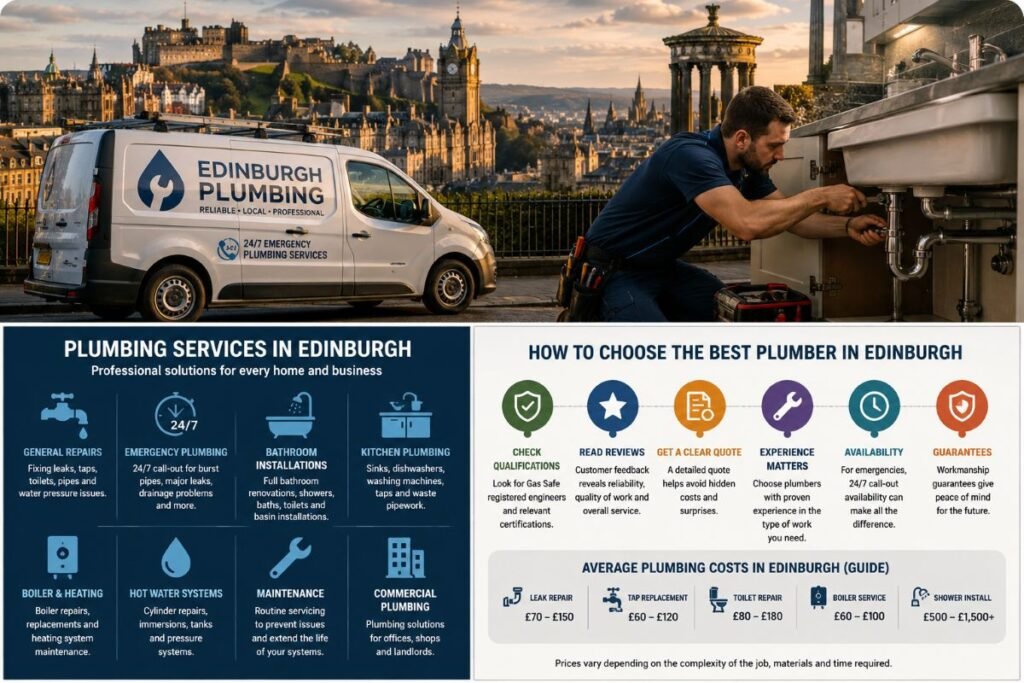
For gas appliances such as boilers, cookers or fires, always use an engineer who is registered with the Gas Safe Register.
Check Independent Customer Reviews
Reviews often reveal useful information about:
- Reliability
- Punctuality
- Quality of workmanship
- Communication
- Cleanliness
- Aftercare
Rather than focusing solely on star ratings, read detailed reviews that describe the customer’s experience.
Ask About Experience
Experience matters because plumbing systems differ greatly between older and newer buildings.
Useful questions include:
- Have you worked on similar properties?
- Have you completed this type of repair before?
- Will specialist parts be required?
- How long is the repair likely to take?
An experienced plumber should be able to explain the likely process clearly.
Request a Written Quote
Professional plumbing businesses usually provide written estimates for planned work.
A quotation should explain:
- Labour costs
- Materials
- Estimated completion time
- VAT (where applicable)
- Any exclusions
This helps avoid misunderstandings once work begins.
What Does Plumbing Cost in Edinburgh?
Prices vary according to the complexity of the job, required materials and whether the work takes place during normal hours or as an emergency call-out.
The table below shows typical pricing ranges seen across many UK cities. Actual quotations will vary between businesses.
| Service | Typical Price Range |
| Leaking tap repair | £60–£120 |
| Toilet repair | £80–£180 |
| Pipe repair | £100–£300 |
| Emergency call-out | £100–£250+ |
| Bathroom installation | Varies depending on scope |
| Kitchen plumbing installation | Varies depending on appliances and pipework |
Factors affecting cost include:
- Age of the property
- Accessibility
- Replacement parts
- Time required
- Emergency attendance
- Weekend or evening work
Obtaining quotations from more than one reputable plumber is often worthwhile for larger projects.
Questions to Ask Before Hiring a Plumber
Before agreeing to any work, consider asking:
- Are you insured?
- Can you provide a written quotation?
- Is your work guaranteed?
- How soon can the work begin?
- Will replacement parts be included?
- Are there additional call-out charges?
- How long is the repair expected to take?
- What happens if further problems are discovered?
Clear communication at the outset often leads to a smoother experience for both customer and contractor.
Emergency Plumbing: What Should You Do First?
A plumbing emergency can escalate quickly, but a few immediate steps may help reduce damage before professional help arrives.
If a Pipe Bursts
- Turn off the property’s main water supply.
- Switch off electrical power if water is near electrical fittings, and it is safe to do so.
- Open nearby taps to drain the remaining water from the system.
- Move furniture and valuables away from the affected area if possible.
- Contact an emergency plumber as soon as possible.
Acting quickly can significantly reduce repair costs and minimise damage to flooring, walls and personal belongings.
Choosing Between Repair and Replacement
Not every plumbing problem requires a complete replacement. In many cases, a targeted repair is sufficient. However, if fixtures or pipework are old, repeatedly failing or no longer efficient, replacement may prove more economical over time.
The decision often depends on factors such as the age of the installation, the availability of replacement parts, expected lifespan and the overall condition of the plumbing system. A reputable plumber should explain the advantages and drawbacks of each option, allowing you to choose the solution that best suits your budget and long-term plans.
Common Plumbing Problems in Edinburgh Homes
Edinburgh’s varied housing stock means plumbers regularly encounter a wide range of issues. Older properties often have ageing infrastructure, while newer developments may present different maintenance challenges.
Leaking Pipes
Leaks remain one of the most frequent reasons for calling a plumber. They may occur because of:
- Corrosion
- Worn seals
- Loose fittings
- Frozen pipe damage
- Accidental impact
Even a slow leak can damage walls, ceilings and flooring if left untreated.
Blocked Drains
Kitchen and bathroom drains gradually collect grease, soap residue, food waste and hair.
Signs include:
- Slow drainage
- Gurgling sounds
- Bad odours
- Water backing up into sinks or showers
Professional drain cleaning often resolves the problem more effectively than chemical drain cleaners, which may damage certain pipe materials if used repeatedly.
Low Water Pressure
Poor water pressure can have several causes, including:
- Partially closed isolation valves
- Pipe blockages
- Internal leaks
- Faulty pressure-reducing valves
- Problems with the property’s plumbing system
A qualified plumber can identify the underlying cause rather than simply treating the symptoms.
Dripping Taps
Although a dripping tap may seem insignificant, it can waste a considerable amount of water over time and increase household bills.
Common causes include:
- Worn washers
- Damaged cartridges
- Loose components
- Mineral build-up
Replacing a small part is often all that’s needed.
Toilet Problems
Professional plumbers regularly deal with:
- Toilets that won’t flush properly
- Constantly running cisterns
- Leaking toilet bases
- Weak flushing
- Blocked waste pipes
Prompt repairs can prevent water damage and reduce unnecessary water consumption.
How to Compare Plumbing Companies
Choosing the best plumbers in Edinburgh isn’t simply about finding the lowest quote. A slightly higher price may reflect greater experience, better workmanship and stronger customer support.
When comparing companies, consider the following factors.
| Factor | Why It Matters |
| Experience | Indicates familiarity with different plumbing systems |
| Qualifications | Demonstrates recognised industry training |
| Insurance | Protects both customer and contractor |
| Customer Reviews | Offers insight into previous clients’ experiences |
| Written Quotes | Helps avoid unexpected costs |
| Guarantees | Provides reassurance if problems arise later |
| Response Time | Particularly important for urgent repairs |
Looking at several factors together usually provides a clearer picture than relying on price alone.
Should You Choose an Independent Plumber or a Larger Company?
Both independent tradespeople and established plumbing firms have advantages.
| Independent Plumber | Larger Plumbing Company |
| Often provides a more personal service | May have larger teams for bigger projects |
| You usually deal with the same person throughout | Greater appointment availability |
| Lower overheads may mean competitive pricing | Can often respond to emergencies more quickly |
| Local reputation is especially important | May offer wider service coverage |
The right choice depends on the type of work required, your preferred level of communication and the company’s reputation.
Signs You’ve Found a Reliable Plumber
Reliable plumbers tend to share several characteristics regardless of company size.
Look for professionals who:
- Arrive when promised or communicate if delayed.
- Explain the problem in plain English.
- Provide clear quotations before starting work.
- Respect your home by keeping work areas tidy.
- Use quality replacement parts.
- Answer questions patiently.
- Issue invoices that clearly outline the work completed.
Good communication is often one of the strongest indicators of professionalism.
Mistakes to Avoid When Hiring a Plumber
Many plumbing problems become more expensive because of decisions made before work even begins.
Common mistakes include:
- Choosing Solely on Price: The cheapest quote may exclude materials, guarantees or follow-up work.
- Ignoring Reviews: Independent customer feedback often highlights recurring issues that advertisements do not.
- Delaying Repairs: Small leaks rarely fix themselves. Waiting can result in damp, mould and structural damage.
- Attempting Complex DIY Repairs: Simple maintenance is one thing, but altering pipework without the right knowledge can lead to costly mistakes and even invalidate home insurance in some circumstances.
- Accepting Verbal Quotes Only: Written estimates help both parties understand exactly what has been agreed.
Preventative Plumbing Maintenance
Regular maintenance helps reduce the likelihood of emergency repairs and can extend the life of your plumbing system.
Consider these practical steps throughout the year.
Check Visible Pipework
Look for:
- Water stains
- Corrosion
- Damp patches
- Small leaks
- Loose joints
Early detection can prevent larger repairs later.
Protect Pipes During Cold Weather
Frozen pipes remain a common winter problem across the UK.
Helpful precautions include:
- Insulating exposed pipes.
- Keeping loft spaces adequately insulated.
- Maintaining a low level of heating during freezing weather if the property is occupied.
- Knowing where the main stopcock is located.
Avoid Drain Blockages
Simple habits can reduce the risk of blocked drains.
Avoid washing these items down sinks or toilets:
- Cooking fats
- Wet wipes
- Cotton buds
- Coffee grounds
- Large food scraps
- Sanitary products
Test Stop Valves
Many homeowners don’t realise their main stopcock has seized until an emergency occurs.
Turning the valve occasionally helps ensure it remains operational.
Schedule Routine Inspections
Older properties may benefit from periodic inspections, especially where original plumbing remains in place.
A professional inspection can identify developing issues before they become expensive emergencies.
Step-by-Step Guide to Choosing the Right Plumber
If you’re comparing several companies, following a structured approach can make the decision easier.
- Define the plumbing problem clearly.
- Decide whether the issue is urgent or can wait.
- Search for experienced local plumbers with strong customer reviews.
- Check relevant qualifications and, where gas appliances are involved, confirm Gas Safe registration.
- Request written quotations from two or three businesses.
- Compare what is included rather than looking only at price.
- Ask about guarantees and estimated completion times.
- Confirm the appointment in writing.
- Keep copies of invoices and any warranty documentation.
Taking these steps helps reduce uncertainty and increases the likelihood of a satisfactory outcome.
Frequently Asked Questions
1. How do I find the best plumbers in Edinburgh?
Start by comparing qualifications, customer reviews and written quotations. A reputable plumber should be transparent about pricing, clearly explain the work required and have experience with similar properties. For gas appliance work, always check that the engineer is registered with the Gas Safe Register.
2. How much does a plumber cost in Edinburgh?
Costs vary depending on the job and its complexity. Simple repairs such as fixing a dripping tap generally cost much less than bathroom renovations or emergency call-outs. Ask for a written quote that clearly outlines labour, materials and any additional charges before work begins.
3. When should I call an emergency plumber?
Call an emergency plumber if there’s an immediate risk to your property or safety. Examples include burst pipes, significant water leaks, overflowing toilets, loss of water supply or plumbing issues causing extensive damage. If safe to do so, turn off the main water supply while waiting for assistance.
4. Can plumbers install bathrooms as well as repair pipes?
Yes, many plumbing companies offer complete bathroom installation services. These may include fitting baths, showers, toilets, basins, pipework and waste systems. Larger renovation projects often involve coordinating with electricians, tilers and other trades.
5. How can I avoid plumbing problems?
Regular maintenance is the best defence. Check exposed pipework for leaks, avoid pouring fats and oils down sinks, keep drains clear of unsuitable items and know where your property’s stopcock is located. Addressing small issues early can help prevent costly repairs later.
6. Should I get more than one plumbing quote?
Yes, especially for larger jobs. Comparing two or three written quotations helps you understand typical costs and what each contractor includes. Don’t choose solely on price—experience, guarantees and customer service are equally important.
7. What qualifications should a plumber have?
Qualifications depend on the type of work being carried out. For general plumbing, look for recognised industry training and relevant experience. If the job involves gas appliances such as boilers or cookers, the engineer must be registered with the Gas Safe Register.
8. Is it worth repairing old plumbing?
It depends on the condition of the system. Minor repairs can extend the life of existing pipework, but repeated failures, corrosion or obsolete materials may make replacement a more economical long-term solution. A professional inspection can help you decide.
Final Wrap-up
Finding the best plumbers in Edinburgh isn’t simply about choosing the first company that appears in a search result. The right plumber should combine technical expertise, transparent pricing and a proven track record of delivering reliable workmanship. Taking time to compare qualifications, read genuine customer reviews and request written quotations can help you avoid unnecessary costs and ensure repairs or installations are completed to a high standard.
Whether you’re dealing with an unexpected leak, planning a new bathroom or carrying out routine home maintenance, selecting an experienced local professional gives you greater confidence that the work will be completed safely and efficiently. Preventative maintenance and prompt attention to small plumbing issues can also reduce the likelihood of more expensive repairs in the future.
For readers ready to compare local services, explore trusted plumbing businesses through the London City Directory to find professionals serving Edinburgh and nearby areas. You may also find these related categories useful when planning home improvements:
- Plumbers
- Heating Engineers
- Bathroom Installers
- Drainage & Drain Cleaning
- Home Improvement & Renovation Services
By choosing qualified professionals and staying proactive with maintenance, you’ll be better prepared to keep your property’s plumbing system running smoothly for years to come.