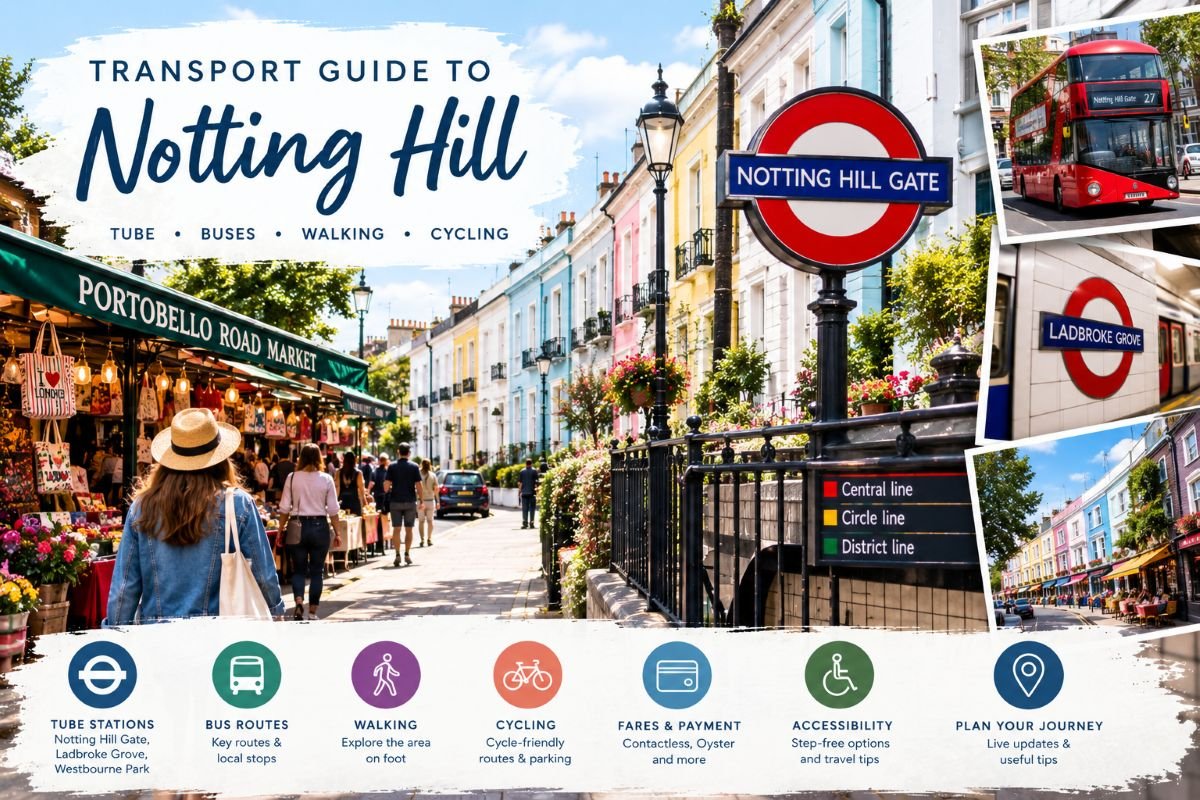
Notting Hill is easy to reach by public transport, but the most convenient station depends on which part of the neighbourhood you are visiting.
Notting Hill Gate serves the southern side and offers access to three Underground lines, while Ladbroke Grove and Westbourne Park are more useful for Portobello Road and streets farther north.
Buses connect the area with other parts of west and central London, and many local sights are close enough to explore on foot.
This transport guide to Notting Hill explains the main routes, how to choose a station, what to know about fares and accessibility, and practical alternatives for market days or late journeys.
Check live TfL information before setting off, as services and station arrangements can change.
Which Tube station should you use?
Notting Hill Gate is the main interchange for many visitors. The Central, Circle, and District lines converge here, making it useful for journeys across central London and westwards.
It is a sensible starting point for the southern end of Notting Hill, including the approach to the shops at Notting Hill Gate and nearby streets.
The station is not step-free, so travellers who need step-free access should check TfL’s current accessibility information and plan an alternative route where necessary.
Ladbroke Grove is served by the Circle and Hammersmith & City lines. It is often convenient for the northern stretch of Portobello Road and the market area, although the best station depends on the exact destination and crowd levels.
Westbourne Park, also on the Circle and Hammersmith & City lines, can suit destinations around Westbourne Grove’s northern end and nearby residential streets. Compare the walking route from each station rather than assuming the nearest station name will always be the most practical.
Transport Guide to Notting Hill: 5 Useful Transport Options
1. Notting Hill Gate Underground station
Choose Notting Hill Gate when you are travelling from central London or want a direct connection to the Central line corridor. Circle and District services provide other route choices, depending on the destination.
It is also a useful reference point for meeting friends before walking into the neighbourhood. Allow extra time at busy periods and check live departures before entering the station, particularly if a disruption could affect an interchange. TfL lists the station’s lines and current service information online.
2. Ladbroke Grove Underground station
Ladbroke Grove is worth considering for Portobello Road Market and the streets around the northern part of the market. It has Circle and Hammersmith & City line services, and TfL provides live arrivals, service status and station details.
Market days can mean more pedestrians and slower progress along nearby roads, so allow time for the walk from the station and avoid planning a tight connection immediately afterwards. [2]
3. Westbourne Park Underground station
Westbourne Park can be a useful alternative for the north-western side of the area. It is served by the Circle and Hammersmith & City lines, as is Ladbroke Grove, so the better choice often comes down to the street you need and the live service pattern.
Check the station-to-destination walking route before travelling, especially if you have luggage, mobility needs or a timed booking.
4. Local buses from Notting Hill Gate
Buses are helpful for short journeys and for reaching destinations where a Tube interchange would be inconvenient.
TfL’s Notting Hill Gate stops list routes including the 27, 28, 52 and 328, alongside night services on some routes; the exact service depends on the stop and direction.
Buses can be slower in traffic, but they may reduce walking or provide a more direct trip. Check the stop name and direction carefully, as stops around the junction serve different routes. [3]
5. Walking and cycling for local journeys
Once you arrive, walking is often the simplest way to connect Portobello Road, Westbourne Grove, independent shops, cafés and nearby garden squares.
Streets can be busy and pavements crowded around the market, so leave extra time if you are meeting someone or catching a train.
Cycling may work for longer local journeys, but check cycle parking and the route before setting off; market crowds and narrow streets can make riding through the busiest sections impractical. Dismount where conditions or local signs make it sensible.
Fares, payment and planning ahead
For most visitors, contactless payment or an Oyster card is convenient for TfL journeys. Use the same contactless card or device consistently when touching in and out, and check the current fare and daily capping rules on TfL before travel.
Bus journeys use a different boarding process from the Underground: touch in when boarding and do not touch out.
If you are travelling with a group, children or a concessionary pass, check the relevant eligibility and ticket rules in advance rather than assuming one payment method suits everyone.
Use TfL’s journey planner and live status updates on the day. Planned engineering work, incidents and station crowd management can affect the quickest route.
This is particularly important during large events and busy market periods, when station access or nearby roads may be managed differently.
If a journey involves a connection, leave a buffer rather than relying on the shortest estimated time.
Accessibility, luggage and late travel
Notting Hill’s Underground stations are not interchangeable from an accessibility perspective. Check the current step-free map and station accessibility details before travelling; a station having escalators does not mean the route is step-free.
If you use a wheelchair, travel with a buggy or have difficulty with stairs, confirm the complete route, including any interchange and the destination’s entrance. TfL’s accessibility guides explain station and platform conditions. [4]
For visitors arriving with suitcases, consider how far you will need to walk from the station and whether the accommodation has steps.
Buses can be useful for reducing walking, but luggage space and traffic can affect comfort and journey time. If you are travelling late, check the last train or bus for your exact route and identify a backup option before leaving a restaurant or event.
Driving and parking
Driving is rarely the easiest way to explore the busiest parts of Notting Hill. Traffic, limited parking and restrictions can make a short local trip less straightforward than taking the Tube or bus.
If you need a car for accessibility, work or luggage, check parking rules and any permit or restriction information for the specific street before travelling.
Do not assume that a space shown on a map is available to the public or that restrictions are the same throughout the neighbourhood.
Choosing the most practical route
Start with the exact address or landmark, then compare the walk from Notting Hill Gate, Ladbroke Grove and Westbourne Park.
Choose the line that minimises awkward changes, but also consider stairs, luggage, crowds and the time of day. For Portobello Road Market, think about which end you want to explore; for destinations farther south, Notting Hill Gate may be more convenient.
Check live TfL updates shortly before departure and again if your plans change.
FAQs
Which Tube station is best for Notting Hill?
Notting Hill Gate is useful for the southern side and connects with the Central, Circle and District lines. Ladbroke Grove or Westbourne Park may be more convenient for parts of Portobello Road and the northern streets. Check the walking distance to your exact destination before choosing.
Does Notting Hill Gate station have step-free access?
Notting Hill Gate is not step-free. If you need step-free travel, check TfL’s current step-free Tube guide and plan the full journey, including interchanges and the destination entrance, before setting off.
Can I travel to Notting Hill by bus?
Yes. Several routes serve stops around Notting Hill Gate, including routes such as the 27, 28, 52 and 328. Routes and stopping points vary, so use TfL’s journey planner or live bus information to confirm the right stop and direction.
Is walking a good way to get around Notting Hill?
Yes, many shops, cafés and local sights are within walking distance of one another. The area around Portobello Road can become crowded, especially during market hours, so allow extra time and consider approaching from a less busy station entrance.
What is the easiest way to pay for public transport?
Contactless payment or Oyster is convenient for many visitors. Check current TfL fare rules and use the same card or device consistently for a journey. Different rules may apply to children, concessions and some ticket types.
Making your journey easier
The simplest transport plan for Notting Hill is usually to travel by Underground, bus or a combination of both, then walk between nearby destinations. Notting Hill Gate offers the broadest line choice, while Ladbroke Grove and Westbourne Park can reduce walking for parts of the market and northern streets.
There is no single best station for every visit, so use the destination rather than the neighbourhood name alone to plan your route. Check fares, accessibility, and live service updates before leaving, and allow extra time during busy periods.