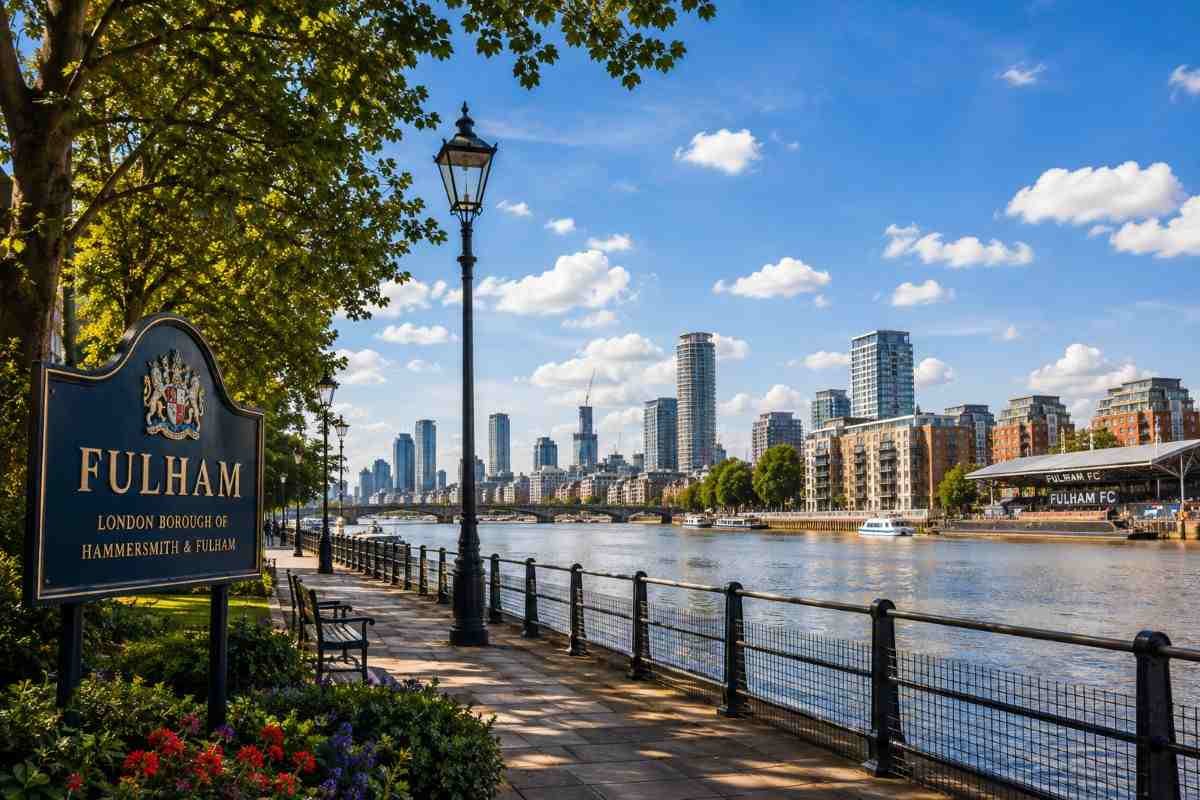
Few London neighbourhoods balance residential charm and city convenience quite like Fulham. Sitting on the north bank of the River Thames within the London Borough of Hammersmith and Fulham, the area has grown from a rural village into one of West London’s most desirable places to live, work and spend time.
This Fulham area guide explores what makes the district distinctive, from its historic streets and riverside walks to its transport links, housing, shopping and community atmosphere. Whether you’re considering a move, planning a day out or want to understand the area better, knowing how Fulham has developed—and how its different neighbourhoods feel—can help you make informed decisions.
Rather than relying on reputation alone, this guide looks at the practical details that matter, including transport connections, local amenities, nearby attractions and the character of different parts of Fulham.
Fulham at a Glance
| Feature | Details |
| London Borough | Hammersmith and Fulham |
| Region | West London |
| River | River Thames |
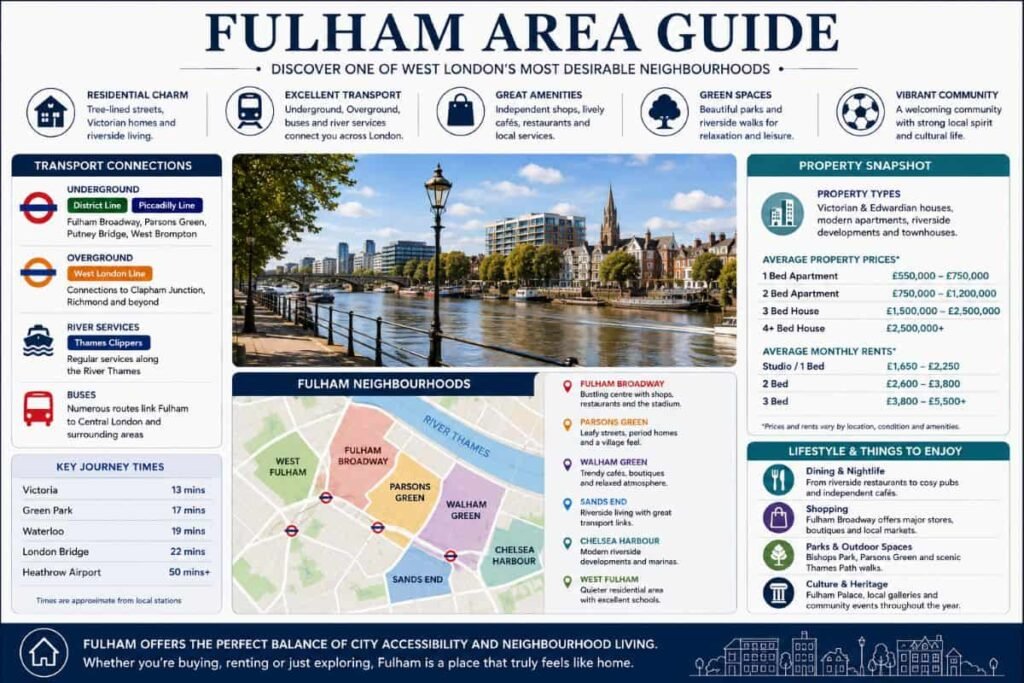
| Main Underground Stations | Fulham Broadway, Parsons Green, Putney Bridge, West Brompton |
| Nearby Areas | Chelsea, Hammersmith, Earl’s Court, Kensington, Putney, Battersea |
| Known For | Riverside walks, residential streets, football, parks, shopping and dining |
Where Is Fulham?
Fulham occupies a large stretch of West London between Chelsea to the east and Hammersmith to the north-west. The River Thames forms much of its southern boundary, separating Fulham from Putney.
Its location places residents within easy reach of Central London while retaining a noticeably more residential character than neighbouring districts such as Kensington or South Kensington.
Major roads, including Fulham Road, New King’s Road, and Wandsworth Bridge Road, connect different parts of the district and serve as the area’s principal shopping and dining corridors.
Because Fulham covers a relatively large area, each neighbourhood has its own identity. Riverside developments, Victorian terraces, leafy residential streets and busy commercial centres all exist within a short distance of one another.
A Brief History of Fulham
Fulham’s history stretches back more than a thousand years. Records show that it existed as a settlement during the Anglo-Saxon period, long before London’s expansion reached this part of the Thames.
For centuries, Fulham remained largely rural, known for market gardens, orchards and open farmland supplying produce to the growing city.
One of the area’s most significant historic landmarks is Fulham Palace, which served as the country residence of the Bishops of London for centuries. Today the palace and its gardens remain an important heritage attraction and provide insight into Fulham’s long-standing importance within London’s history.
The arrival of the railway during the nineteenth century transformed Fulham. Improved transport links encouraged residential development, replacing agricultural land with terraces, villas and public amenities. Victorian and Edwardian architecture still defines much of the area’s streetscape today.
Throughout the twentieth century, Fulham continued to evolve as industry declined and residential investment increased. In recent decades, regeneration projects, riverside developments and improvements to public spaces have further strengthened its appeal while preserving many historic buildings and neighbourhoods.
The Character of Fulham
Fulham is often described as one of London’s more residential districts, and much of its appeal comes from that balance between local community and city accessibility.
Unlike areas dominated by office developments or major tourist attractions, Fulham’s streets are primarily lined with homes, independent cafés, neighbourhood shops, schools and parks.
The atmosphere changes noticeably between different parts of the district.
Near Fulham Broadway, the pace is busier, with shopping, restaurants, offices and Chelsea Football Club attracting visitors throughout the week.
Moving south towards Parsons Green and the Thames, streets become quieter, with tree-lined avenues, Victorian homes and open green spaces creating a more relaxed environment.
Many residents appreciate that everyday essentials are typically within walking distance, making the area well suited to those who prefer neighbourhood living without sacrificing access to Central London.
Fulham’s Distinct Neighbourhoods
Fulham Broadway
Fulham Broadway serves as one of the area’s commercial centres.
It combines shopping, restaurants, cafés, supermarkets and transport links around Fulham Broadway Underground station.
The area becomes particularly lively on Chelsea FC matchdays due to its proximity to Stamford Bridge.
Best for
- Shopping
- Public transport
- Dining
- Entertainment
- Matchday atmosphere
Parsons Green
Parsons Green has a distinctly village-like feel despite its central London location.
The green itself acts as a community focal point, surrounded by cafés, restaurants and residential streets.
Victorian and Edwardian homes dominate the surrounding roads, making the neighbourhood especially popular with families and professionals.
Best for
- Residential living
- Cafés
- Green spaces
- Community atmosphere
Sands End
Located towards the south-west of Fulham near the Thames, Sands End has experienced considerable redevelopment over recent decades.
Former industrial land has gradually been replaced by modern housing, landscaped public spaces and riverside developments.
The nearby South Park provides one of the area’s largest green spaces.
Best for
- Riverside living
- Modern apartments
- Parks
- Families
Fulham Riverside
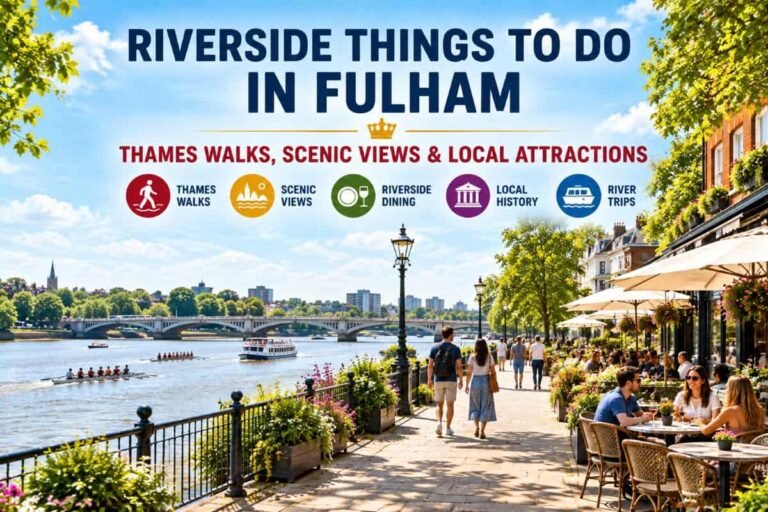
The riverside stretches along the Thames and offers some of West London’s most attractive walking routes.
Residential developments overlook the river, while nearby cafés and public open spaces make this one of the quieter parts of Fulham.
The Thames Path connects Fulham with neighbouring districts including Putney, Chelsea and Hammersmith.
Getting Around Fulham
Transport is one of Fulham’s strongest advantages.
The district is well connected by Underground services, buses, cycling routes and major roads, making travel across London relatively straightforward.
Underground Stations
Several London Underground stations serve the area:
| Station | Line |
| Fulham Broadway | District Line |
| Parsons Green | District Line |
| Putney Bridge | District Line |
| West Brompton | District Line, London Overground |
| Imperial Wharf (nearby) | London Overground |
These stations provide direct access towards Westminster, Victoria, Earl’s Court, South Kensington and the City via interchange.
Bus Services
A wide range of Transport for London bus routes connect Fulham with:
- Hammersmith
- Chelsea
- Kensington
- Victoria
- Putney
- Clapham Junction
- Shepherd’s Bush
- Central London
Frequent services mean many residents rely on buses for shorter journeys across West London.
Cycling
Fulham has become increasingly cycle-friendly.
Dedicated cycle routes, quieter residential streets and access to the Thames Path encourage cycling for both commuting and leisure.
Cycle parking facilities have also expanded in recent years, particularly around transport hubs and shopping areas.
Road Connections
Drivers benefit from relatively direct access to:
- A4
- A308
- Wandsworth Bridge
- Putney Bridge
- Hammersmith Bridge (subject to current traffic restrictions)
As with much of London, traffic conditions vary significantly during peak periods.
Living in Fulham
Fulham attracts a broad mix of residents, including young professionals, established families, international residents and long-term Londoners.
Several factors contribute to its popularity.
Residential Streets
Many roads feature well-preserved Victorian and Edwardian terraced houses alongside mansion blocks and modern apartment developments.
Tree-lined streets and smaller neighbourhood shopping parades contribute to a more residential feel than many central London districts.
Community Feel
Despite its proximity to Central London, Fulham retains a strong local identity.
Neighbourhood cafés, independent retailers, sports clubs and community events encourage residents to engage with the area beyond simply commuting.
Parsons Green and surrounding streets are particularly noted for their neighbourhood atmosphere.
Green Spaces
Access to open space is another advantage.
Residents enjoy several public parks, riverside walks and recreational facilities without travelling far from home.
These green areas support everything from organised sport to casual walks and outdoor family activities.
Who Is Fulham Best Suited To?
Fulham appeals to a range of lifestyles.
| Lifestyle | Why Fulham Works Well |
| Professionals | Good transport connections and local amenities |
| Families | Schools, parks and quieter residential streets |
| Couples | Restaurants, cafés and riverside walks |
| Sports Fans | Stamford Bridge and local leisure facilities |
| Outdoor Enthusiasts | Thames Path, parks and cycling routes |
Things to Do in Fulham
Fulham offers far more than residential streets and convenient transport. Its mix of riverside scenery, historic landmarks, sporting venues, parks and independent businesses means there’s plenty to enjoy throughout the year without needing to travel into Central London.
Whether you’re visiting for a day or living locally, many attractions are within walking distance of one another, making it easy to explore at your own pace.
Parks and Green Spaces
One of Fulham’s biggest strengths is its access to outdoor space. From formal gardens to riverside walks, the area provides a welcome contrast to London’s busier commercial districts.
Bishops Park
Set beside the River Thames, Bishops Park is one of Fulham’s best-known public parks. Located next to Fulham Palace, it combines open lawns, mature trees and attractive riverside paths.
Facilities include:
- Children’s playground
- Tennis courts
- Café
- Ornamental gardens
- Walking and jogging routes
- Views across the Thames
Its location also makes it an ideal starting point for a longer walk towards Putney or Hammersmith.
South Park
Situated in the Sands End neighbourhood, South Park is popular with local families and sports clubs.
Visitors will find:
- Football pitches
- Tennis courts
- Children’s play area
- Open green space
- Seasonal community events
The park’s wide lawns make it particularly suitable for picnics and informal recreation during warmer months.
Eel Brook Common
Near Parsons Green, Eel Brook Common provides another valuable green space for residents.
The common is widely used for:
- Dog walking
- Outdoor fitness
- Football
- Running
- Family activities
Its central location means it remains busy throughout the week while still offering plenty of space to relax.
Thames Path
The Thames Path is one of West London’s most enjoyable walking routes.
From Fulham, walkers can follow the river east towards Chelsea or west to Hammersmith and beyond, passing historic buildings, riverside pubs, rowing clubs and green spaces along the way.
The route is also popular with cyclists and runners.
Historic Landmarks
Although Fulham is primarily residential today, several important historic sites remain.
Fulham Palace
For centuries, Fulham Palace served as the country residence of the Bishops of London.
Today, visitors can explore:
- Historic buildings
- Botanical gardens
- Museum displays
- Archaeological features
- Café
- Regular exhibitions and community events
The gardens are free to enter and provide a peaceful setting close to the Thames.
All Saints Church
Standing beside the Thames near Fulham Palace, All Saints Church has medieval origins, although much of the present building dates from later restoration.
The church remains an important part of Fulham’s historic riverside landscape and reflects the area’s long history before London’s urban expansion.
Sport in Fulham
Sport has shaped Fulham’s identity for well over a century.
Stamford Bridge
Although commonly associated with neighbouring Chelsea, Stamford Bridge lies within Fulham and is home to Chelsea Football Club.
On matchdays, the surrounding streets become considerably busier, with supporters gathering in local cafés, restaurants and pubs before and after games.
The stadium also hosts guided tours and a museum, offering visitors an insight into one of English football’s most successful clubs.
Craven Cottage
Located on the banks of the Thames, Craven Cottage is home to Fulham Football Club and is one of the oldest football grounds still used in the Premier League.
Its riverside setting and traditional architecture make it distinctive among modern football stadiums.
Matchdays contribute significantly to the local atmosphere while remaining closely integrated with the surrounding residential neighbourhood.
Shopping in Fulham
Fulham is known more for neighbourhood shopping than large retail centres, making it appealing to those who prefer independent businesses alongside well-known national brands.
Fulham Road
Fulham Road forms one of the area’s principal shopping streets.
Here you’ll find a mixture of:
- Independent boutiques
- Homeware shops
- Fashion retailers
- Beauty services
- Supermarkets
- Cafés
- Restaurants
The variety means residents can often complete everyday errands without travelling elsewhere.
New King’s Road
Running through Parsons Green towards Chelsea, New King’s Road offers a more relaxed shopping experience.
The street is particularly known for:
- Interior design shops
- Independent cafés
- Delicatessens
- Florists
- Lifestyle retailers
It retains much of its neighbourhood character despite being close to Central London.
Wandsworth Bridge Road
This increasingly popular shopping street combines local convenience with independent businesses.
Visitors can expect:
- Coffee shops
- Bakeries
- Restaurants
- Home furnishings
- Specialist retailers
- Local services
The road has become a destination in its own right for residents seeking smaller independent businesses.
Food and Drink
Fulham’s dining scene reflects the area’s diverse community.
Rather than being dominated by tourist venues, most restaurants and cafés primarily serve local residents.
Across the district you’ll find:
- Traditional British pubs
- European cafés
- Italian restaurants
- Asian cuisine
- Middle Eastern restaurants
- Modern brunch venues
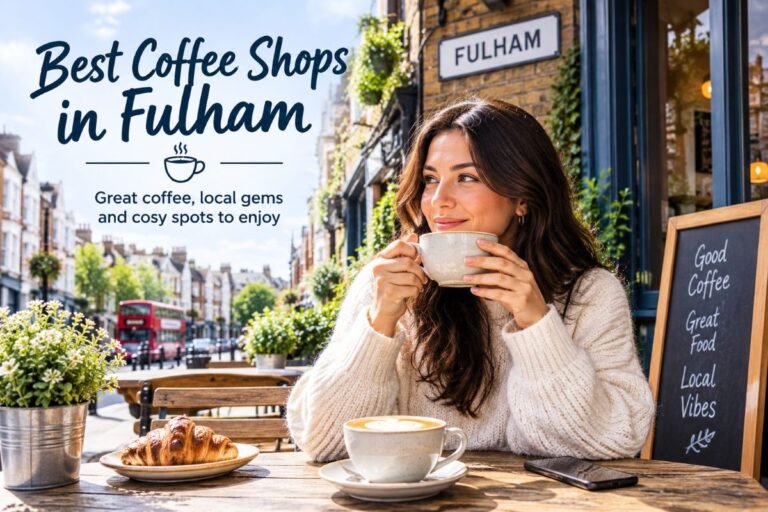
- Independent coffee shops
- Artisan bakeries
Many dining options are concentrated around:
- Fulham Road
- Parsons Green
- New King’s Road
- Wandsworth Bridge Road
- Fulham Broadway
The choice ranges from casual cafés to more refined neighbourhood restaurants, giving residents plenty of variety without leaving the area.
Education
Families considering Fulham often place education high on their list of priorities.
The area contains a mixture of:
- State primary schools
- Secondary schools
- Independent schools
- Nurseries
- Sixth-form colleges
Several neighbouring districts also expand the range of educational options within a short journey.
As school admissions and performance can change over time, parents should consult the relevant local authority and Ofsted reports when making decisions.
Healthcare
Residents have access to a wide range of healthcare services within Fulham and nearby West London.
These include:
- NHS GP surgeries
- Dental practices
- Pharmacies
- Physiotherapy clinics
- Opticians
- Private medical providers
For hospital care, residents are served by several major NHS hospitals in neighbouring parts of West London, depending on the required speciality and local NHS arrangements.
Property in Fulham
Fulham’s housing stock is one of its defining features.
Rather than being dominated by high-rise developments, much of the area consists of attractive Victorian and Edwardian streets that have evolved over many decades.
Common property types include:
| Property Type | Typical Buyers or Residents |
| Victorian terraced houses | Families |
| Edwardian homes | Families and professionals |
| Mansion flats | Professionals and couples |
| Riverside apartments | Professionals and downsizers |
| Modern developments | First-time buyers and investors |
Housing demand generally remains strong due to Fulham’s transport links, schools and proximity to Central London.
Property prices and rental costs tend to be higher than the UK average, reflecting the area’s popularity and West London location.
Anyone planning to buy or rent should research current market conditions and seek professional advice before making financial commitments.
Is Fulham a Good Place to Live?
For many people, Fulham strikes a balance that’s increasingly difficult to find in London.
Advantages
- Excellent Underground connections
- Attractive residential streets
- Good range of parks
- Strong café and restaurant scene
- Riverside walks
- Established local community
- Wide choice of housing styles
- Easy access to Central London
Considerations
- Property prices are relatively high.
- Rental costs can be expensive.
- Matchdays around Stamford Bridge and Craven Cottage can increase traffic and pedestrian activity.
- Some roads become busy during peak commuting hours.
Whether Fulham suits you depends on your priorities. Those seeking lively nightlife may prefer nearby Soho or Shoreditch, while people looking for suburban living may favour outer London. Fulham appeals most to those who value neighbourhood amenities, green spaces and straightforward access to the rest of the capital.
Nearby Areas Worth Exploring
Fulham’s location makes it easy to explore several neighbouring districts, each with its own character.
| Area | Why Visit? |
| Chelsea | Historic streets, museums, King’s Road shopping and riverside walks |
| Hammersmith | Major transport hub, theatres, riverside pubs and shopping |
| Kensington | Cultural attractions, gardens and elegant architecture |
| Earl’s Court | Residential streets with excellent transport connections |
| Putney | Thames riverside, rowing clubs, shopping and green spaces |
| Battersea | Battersea Park, riverside developments and cultural venues |
These neighbouring areas expand the range of leisure, shopping and cultural experiences available within a short journey from Fulham, making the district an excellent base for exploring West London.
Comparison Tables
Fulham Compared with Nearby West London Areas
| Area | Best For | Atmosphere | Transport | Housing Style |
| Fulham | Families, professionals, riverside living | Residential with lively local centres | Excellent | Victorian terraces, mansion flats, modern apartments |
| Chelsea | Luxury shopping, dining and culture | Upscale and historic | Excellent | Georgian and Victorian townhouses, luxury apartments |
| Hammersmith | Commuters, entertainment and business | Busy urban centre | Excellent | Mix of flats, terraces and modern developments |
| Putney | Outdoor activities and families | Relaxed riverside | Very Good | Victorian homes, riverside apartments |
| Kensington | Museums and premium living | Historic and refined | Excellent | Grand period homes and luxury apartments |
Fulham at a Glance
| Category | What to Expect |
| Borough | London Borough of Hammersmith and Fulham |
| Character | Residential, riverside, community-focused |
| Underground | District line stations plus London Overground nearby |
| Green Spaces | Bishops Park, South Park, Eel Brook Common |
| Shopping | Independent retailers, local high streets and national brands |
| Dining | Cafés, gastropubs, international restaurants and bakeries |
| Sport | Chelsea FC and Fulham FC |
| Property | Victorian terraces, mansion flats and contemporary apartments |
Pros and Cons of Living in Fulham
| Pros | Cons |
| Excellent public transport | Higher-than-average property prices |
| Attractive riverside walks | Premium rental costs |
| Good choice of parks | Busy roads during peak periods |
| Strong selection of cafés and restaurants | Football matchdays can increase local congestion |
| Historic character with modern amenities | Limited large-scale shopping centres |
| Access to Central London | Parking can be challenging on some residential streets |
Quick Summary
Fulham is best known for:
- A well-established residential community in West London.
- Excellent District line transport connections.
- Attractive Victorian and Edwardian streets.
- Riverside walks along the Thames.
- Historic sites including Fulham Palace.
- Premier League football at Stamford Bridge and Craven Cottage.
- Independent cafés, restaurants and neighbourhood shopping streets.
- Parks and green spaces suited to families and outdoor recreation.
It is particularly appealing to professionals, families and anyone seeking a neighbourhood with good amenities, strong transport links and easy access to Central London.
Frequently Asked Questions
Is Fulham a good place to live?
Yes. Fulham is widely regarded as one of West London’s most desirable residential areas thanks to its transport links, parks, schools, shopping streets and riverside setting. Housing costs are relatively high, but many residents value the balance between local amenities and access to Central London.
Which London borough is Fulham in?
Fulham forms part of the London Borough of Hammersmith and Fulham.
Which Underground line serves Fulham?
Most stations in Fulham are served by the District line, including Fulham Broadway, Parsons Green and Putney Bridge. West Brompton also provides London Overground connections.
Is Fulham expensive?
Compared with many parts of London, Fulham has above-average property prices and rental costs. Its popularity, location and housing stock contribute to higher demand.
What is Fulham famous for?
Fulham is known for:
- Fulham Palace
- The River Thames
- Chelsea Football Club’s Stamford Bridge stadium
- Fulham Football Club’s Craven Cottage
- Attractive residential streets
- Parks and riverside walks
Is Fulham suitable for families?
Many families choose Fulham because of its parks, schools, quieter residential roads and community atmosphere. Access to healthcare, sports facilities and transport also adds to its appeal.
Are there good parks in Fulham?
Yes. Popular green spaces include Bishops Park, South Park and Eel Brook Common. The Thames Path also provides scenic walking and cycling routes.
Can you walk along the Thames in Fulham?
Yes. The Thames Path passes through Fulham and links the area with neighbouring districts including Chelsea, Putney and Hammersmith, making it popular with walkers, runners and cyclists.
Final Thoughts
Fulham has earned its reputation as one of West London’s most established residential neighbourhoods by combining historic character with practical everyday convenience. Its riverside setting, varied housing, well-used parks and reliable transport links make it attractive to a broad range of residents, while local high streets continue to support independent businesses alongside familiar national names.
For visitors, Fulham offers more than football grounds and riverside walks. Historic landmarks, community green spaces and a thriving food scene provide plenty of reasons to explore beyond the main attractions. For those considering a move, spending time in different parts of the area—from Fulham Broadway to Parsons Green and Sands End—can help identify the neighbourhood that best matches your lifestyle and priorities.
As part of a wider exploration of West London, this Fulham area guide is best used alongside guides to neighbouring districts, local business listings and transport resources to build a fuller picture of what the area has to offer.