London’s Chinese New Year celebrations bring thousands of people into the West End for a day of cultural performances, lion and dragon dances, traditional food and community activities. The celebrations are among the capital’s best-known annual cultural events, attracting residents, visitors and families from across the UK.
In 2027, Chinese New Year falls on Saturday 6 February, marking the beginning of the Year of the Goat. The main London celebration has been confirmed for Sunday 7 February 2027, according to the London Chinatown Chinese Association (LCCA).
The main festivities are traditionally centred around Chinatown, Trafalgar Square and the surrounding West End streets. Visitors can expect a combination of public performances, seasonal decorations and opportunities to experience Chinese culture, although the full programme for 2027 is still awaited.
There are also other celebrations taking place beyond central London, including a Lunar New Year event at the University of Westminster’s Harrow Campus. This gives visitors more than one opportunity to take part in the festivities.
Here is what is confirmed so far, where to go, how to plan your visit, and what to know before attending Chinese New Year events in London in 2027.
When Is Chinese New Year in London 2027?
Chinese New Year begins on Saturday 6 February 2027. London’s main public celebration will take place the following day, Sunday 7 February 2027.
Chinese New Year, also known as Lunar New Year or the Spring Festival, marks the beginning of a new year according to the traditional Chinese lunisolar calendar. Its date changes annually, usually falling between late January and mid-February.
For London visitors, it is useful to distinguish between the actual Lunar New Year date and the date of the main public celebration.
| Important date | Event |
| Friday 5 February 2027 | University of Westminster Lunar New Year event |
| Saturday 6 February 2027 | Chinese New Year’s Day |
| Sunday 7 February 2027 | Main London Chinese New Year celebration |
| 6–20 February 2027 | Chinatown’s listed celebration period |
The London Chinatown Chinese Association has confirmed the main celebration date. However, the detailed programme, including exact parade timings, performance schedules and the final event route, should be checked closer to February.
2027 is the Year of the Goat, also referred to as the Year of the Sheep in some English translations. Chinatown London identifies it as the Year of the Fire Goat.
Chinese New Year Events in London 2027: What Is Confirmed?
There are several event listings and celebration dates worth knowing about before making plans.
The following table separates confirmed event information from programme details that have not yet been announced.
| Event | Date | Location | Entry and booking |
| Main London Chinese New Year celebration | 7 February 2027 | Chinatown and wider West End | Main public celebration generally free; check official event guidance |
| Chinese New Year in Chinatown | 6–20 February 2027 | Chinatown | Individual activities and businesses may have separate costs |
| World in Westminster Festival: Lunar New Year | 5 February 2027, 4 pm–7 pm | The Forum, University of Westminster, Harrow Campus | Free, but booking required |
The main West End celebration is the largest event to prioritise if you want to experience London’s traditional public festivals. Chinatown’s longer celebration period offers a broader opportunity to visit the neighbourhood, while the Harrow event provides a separate cultural programme outside central London.
1. Main Chinese New Year Celebration in Trafalgar Square and Chinatown
The main London celebration is the event to prioritise if you want to experience the scale of Chinese New Year in the capital.
Organised by the London Chinatown Chinese Association, the annual festivities bring together cultural groups, performers, local businesses and visitors from across London. The celebration traditionally takes place across several parts of the West End, with Chinatown and Trafalgar Square serving as major gathering points.
London Chinatown Chinese Association (LCCA)+2
Although the 2027 programme has not yet been released, previous celebrations provide a useful indication of what visitors may encounter.
What can visitors expect?
Lion and dragon dances
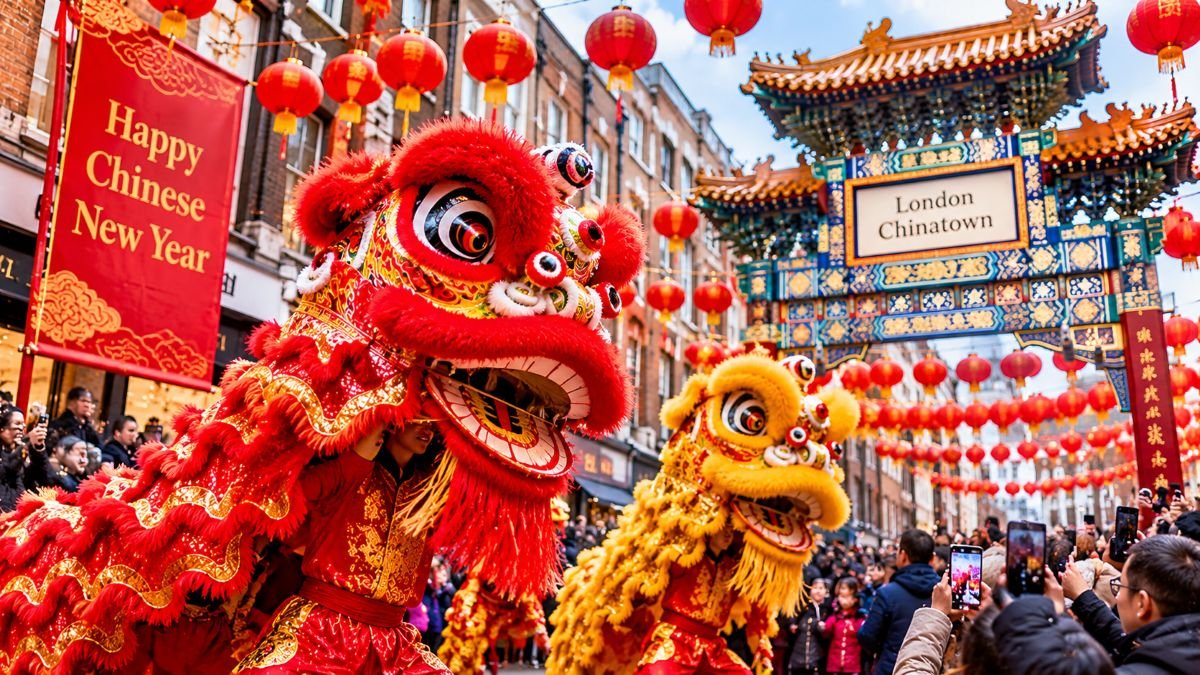
Lion and dragon dances are among the most recognisable features of Chinese New Year celebrations. Performers move through public spaces accompanied by drums, cymbals and gongs.
The lion dance is traditionally associated with good fortune, protection and the welcoming of prosperity. It is particularly popular with families and photographers.
Chinese New Year parade
The annual West End parade has traditionally featured colourful floats, performers, dance groups and cultural displays.
Previous celebrations have brought processions through the Chinatown and West End area, attracting large crowds. The exact 2027 route and starting time have not yet been confirmed by the organiser, so visitors should avoid relying on previous years’ arrangements.
Cultural performances
Trafalgar Square has traditionally hosted major stage performances. Previous programmes have included traditional Chinese music, dance, martial arts and contemporary cultural entertainment.
These performances offer an opportunity to experience different aspects of Chinese heritage rather than simply watching the parade.
Family activities
Past celebrations have included cultural demonstrations, workshops and activities for younger visitors. Families should check the official programme before travelling to identify any age-specific activities and suitable viewing areas.
Is Trafalgar Square worth visiting?
Yes, particularly if you are interested in the main stage performances and the wider public celebration.
The square is one of the principal locations associated with London’s Chinese New Year festivities. However, it can become crowded, particularly during popular performances.
If watching a particular performance is important, check the official timetable when it is released and plan your arrival accordingly.
2. Chinese New Year Celebrations in Chinatown, London
Chinatown is at the centre of London’s Chinese New Year celebrations.
Located in Soho, the neighbourhood is known for its Chinese restaurants, bakeries, supermarkets, traditional decorations and cultural businesses. During Lunar New Year, its streets become a focal point for seasonal activity.
Chinatown London’s official event listing gives the 2027 celebration period as 6–20 February, covering a wider period than the main public celebration on 7 February. The organisers have indicated that further programme information will follow.
What makes Chinatown special during Chinese New Year?
Gerrard Street is the main street running through Chinatown. It is surrounded by restaurants and shops, with nearby streets including Lisle Street, Wardour Street and Rupert Street.
Visitors can expect the neighbourhood to be an important part of the wider celebrations, with seasonal decorations and opportunities to enjoy Chinese food.
Depending on the final programme, activities may include:
- Traditional lion-dance performances.
- Chinese New Year decorations and lantern displays.
- Seasonal food and restaurant offers.
- Cultural activities and community celebrations.
- Opportunities to explore Chinese shops, bakeries and restaurants.
These are typical features of the wider celebration, not a confirmed list of individual 2027 activities.
What food should you try in Chinatown?
A visit to Chinatown can be an opportunity to sample dishes associated with Chinese food traditions.
Some popular choices include:
| Food | What it is |
| Dumplings | Filled parcels that may be steamed, boiled or fried. |
| Dim sum | A selection of small dishes, commonly served with tea. |
| Roast duck | A traditional Chinese roast meat dish, often served with rice or noodles. |
| Spring rolls | Pastry rolls filled with vegetables or other ingredients. |
| Noodles | Available in different regional styles, broths and preparations. |
| Sweet rice cakes | Traditional festive foods associated with good fortune and progress. |
Food traditions differ between Chinese regions and families. There is no single menu that represents every Chinese New Year celebration.
Restaurant menus, prices and opening times will vary. If you have a particular restaurant in mind, check its website or contact the business directly before visiting.
3. Lunar New Year at the University of Westminster, Harrow
The central London celebration is not the only event listed for February 2027.
The University of Westminster has published a separate Lunar New Year event as part of its World in Westminster Festival.
The event is scheduled for:
- Date: Friday 5 February 2027
- Time: 4 pm–7 pm
- Cost: Free
- Booking: Advance ticket required
- Organiser: University of Westminster
The university’s event information describes an evening of cultural activities, performances, traditional calligraphy and food.
University of Westminster
This event is separate from the LCCA’s main West End celebration. It may be worth considering for people who prefer a scheduled indoor programme or live closer to the Harrow area.
Visitors should use the university’s booking page to confirm the venue, availability and entry instructions before making travel arrangements.
4. Other Places to Explore During Chinese New Year in London
A visit to Chinatown can easily be combined with other parts of the West End.
These nearby areas are useful for extending your day, although visitors should remember that the main event programme is subject to official confirmation.
Leicester Square
Leicester Square is close to Chinatown and provides a convenient meeting point for visitors exploring the West End.
The square is surrounded by cinemas, restaurants and entertainment venues. It is also a useful reference point when walking between Chinatown and other central London attractions.
During major public celebrations, expect busy pavements and increased pedestrian activity.
Soho
Soho surrounds Chinatown and is known for its restaurants, cafés, theatres and independent businesses.
Visitors can explore streets such as Dean Street and Old Compton Street before or after the celebrations.
Soho is also a practical option if you want to find somewhere to eat away from the busiest parts of Gerrard Street.
Trafalgar Square
Trafalgar Square is one of London’s best-known public spaces and a traditional location for the Chinese New Year stage programme.
It is close to the National Gallery, Whitehall and Charing Cross, making it convenient to combine the event with sightseeing.
Check the event programme before assuming that a particular performance or activity will take place there in 2027.
Covent Garden
Covent Garden is within walking distance of Chinatown and offers another option for visitors spending the day in central London.
Its market building, shops, restaurants and surrounding streets make it a useful stop before or after the festivities.
Check the official Covent Garden website for any separately organised Lunar New Year activities closer to the date.
How to Get to London’s Chinese New Year Celebrations
The main event area is in the West End, which is well connected by London Underground, buses and rail services.
The most convenient station will depend on which part of the celebration you want to visit.
| Station | Lines | Useful for |
| Leicester Square | Northern and Piccadilly | Chinatown and Leicester Square |
| Piccadilly Circus | Bakerloo and Piccadilly | Soho and the wider West End |
| Charing Cross | Bakerloo and Northern | Trafalgar Square |
| Tottenham Court Road | Central and Northern, plus Elizabeth line | Soho and the northern West End |
| Covent Garden | Piccadilly | Covent Garden and nearby attractions |
Station entrances and surrounding streets can become congested during large events. The nearest station is not necessarily the quickest option at busy times.
Practical transport advice
- Check Transport for London’s journey planner before leaving.
- Allow additional time for walking between event locations.
- Check for temporary road closures and station restrictions.
- Consider walking between nearby West End locations rather than making short Underground journeys.
- Keep an alternative route in mind if your preferred station is particularly busy.
For live information, use the Transport for London website.
Tips for Visiting Chinese New Year Events in London
Large public celebrations require a little planning, particularly if you are visiting with children or travelling from outside London.
Arrive with enough time
The main celebration is expected to attract substantial crowds, as it has in previous years.
If you want to watch a particular performance, check the official timetable and arrive early enough to find a suitable viewing position.
Avoid leaving your journey until the last minute, particularly if you are travelling into central London.
Wear comfortable clothing
February is generally a cold month in London, and much of the main celebration takes place outdoors.
Consider wearing:
- A warm coat.
- Comfortable walking shoes.
- Layers that can be adjusted throughout the day.
- A waterproof jacket in case of rain.
- Gloves and a scarf if temperatures are low.
Red is commonly associated with good fortune and celebration during Chinese New Year. Some visitors choose to wear red clothing, although there is no requirement to do so.
Plan meals around busy periods
Chinatown is likely to be particularly busy around lunchtime during the main celebration.
If you want to eat at a specific restaurant, check whether it accepts reservations and whether its usual arrangements will apply on the event day.
Eating earlier or later may help you avoid the busiest period.
Keep children close
Families should agree on a meeting point before entering crowded areas.
Keep children within sight, avoid pushing through dense crowds and follow any instructions issued by event stewards.
If the organisers publish specific family facilities or lost-child arrangements, check these before travelling.
Consider accessibility
Crowded streets, temporary barriers and event infrastructure can make some routes more difficult to navigate.
Visitors with mobility requirements should check the organiser’s accessibility information and TfL’s station accessibility details in advance.
A little planning can help avoid unnecessary difficulties on the day.
Is Chinese New Year in London Free?
Yes. The main public Chinese New Year celebration in central London is generally free to attend.
The annual parade and outdoor cultural performances have traditionally been open to the public, without requiring a general admission ticket. Visit London also describes the central celebration as a free public event.
visitlondon.com+1
However, visitors should distinguish between the main public festivities and separately organised activities.
| Activity | Expected cost |
| Main West End public celebration | Generally free |
| Watching public performances | Generally free |
| Walking around Chinatown | Free |
| Restaurant meals | Paid |
| Shopping and seasonal food | Paid |
| Separate workshops or organised events | Depends on the organiser |
| University of Westminster Lunar New Year event | Free, but ticket required |
The University of Westminster event requires booking despite being free. Other private activities may have their own admission arrangements.
Always check the individual event listing before travelling.
Understanding the Year of the Goat in 2027
Chinese New Year 2027 welcomes the Year of the Goat, also known as the Year of the Sheep.
The Chinese zodiac follows a 12-year cycle, with each year represented by an animal. The Goat is the eighth animal in the traditional sequence.
In Chinese cultural traditions, the Goat is often associated with qualities such as peace, kindness, creativity and thoughtfulness. These associations vary across interpretations and should be understood as traditional symbolism rather than predictions.
2027 is specifically described as the Year of the Fire Goat.
The combination of an animal and one of the five traditional elements forms part of the wider Chinese zodiac cycle. The Fire element is traditionally associated with energy, warmth and passion.
For visitors attending the London celebrations, the zodiac animal is likely to feature in seasonal decorations, event displays and cultural references.
Why is red associated with Chinese New Year?
Red is one of the most recognisable colours associated with Chinese New Year.
In Chinese traditions, it is commonly connected with good fortune, happiness, celebration and protection against misfortune.
Red lanterns, decorations, clothing and envelopes are familiar features of the festival. Visitors will often see red decorations throughout Chinatown during the celebrations.
Chinese New Year in London: Which Celebration Should You Choose?
The best option depends on what you want to experience.
The main West End event is the natural choice for visitors interested in the large public celebration. Chinatown is better suited to those who want to explore the neighbourhood and its food businesses over a longer period.
The University of Westminster event offers a different experience, with a scheduled cultural programme in a separate location.
| Feature | Main West End celebration | Chinatown celebration period | Westminster Harrow event |
| Date | 7 February | 6–20 February | 5 February |
| Location | Central London | Chinatown | Harrow Campus |
| Main focus | Public festivities and performances | Neighbourhood activities | Organised cultural event |
| Food | Chinatown restaurants and food businesses | Local restaurants and seasonal offers | Food included in event description |
| Family suitability | Check programme and crowd conditions | Suitable for a general neighbourhood visit | Check event arrangements |
| Cost | Main public event generally free | Walking around is free; purchases cost extra | Free, ticket required |
| Programme status | Detailed schedule pending | Further information pending | Event listing published |
Which should you attend?
- For the main celebration: Choose the West End event on Sunday 7 February.
- For food and local atmosphere: Visit Chinatown during its listed 6–20 February celebration period.
- For an organised cultural programme: Consider the University of Westminster event on Friday 5 February.
You can also combine a Chinatown visit with Trafalgar Square, Leicester Square and Covent Garden, provided you allow enough time to move between crowded locations.
Frequently Asked Questions About Chinese New Year Events in London
1. When is Chinese New Year in London in 2027?
Chinese New Year falls on Saturday 6 February 2027. The London Chinatown Chinese Association has confirmed that the main London celebration will take place on Sunday 7 February 2027.
London Chinatown Chinese Association (LCCA)
2. When is the Chinese New Year parade in London?
The main London celebration is confirmed for Sunday 7 February 2027. However, the exact parade start time, route and performance timetable have not yet been published by the organiser. Check the LCCA website for updates before travelling.
3. Where are the main Chinese New Year celebrations in London?
The main festivities are traditionally centred around Chinatown, Trafalgar Square and the wider West End. These locations have hosted public performances, parade activities and cultural celebrations in previous years.
4. Is Chinese New Year in London free?
The main public celebration is generally free to attend. Visitors can watch public performances and explore Chinatown without purchasing a general admission ticket. Restaurants, food purchases and separately organised activities may involve additional costs.
5. What animal represents Chinese New Year 2027?
2027 is the Year of the Goat, also called the Year of the Sheep. It is specifically known as the Year of the Fire Goat.
6. How long do Chinese New Year celebrations last in London?
The main public celebration takes place on 7 February 2027. Chinatown London lists a wider celebration period from 6 to 20 February, although individual activities within that period are still to be announced.
7. Which Underground station is best for Chinatown?
Leicester Square is a convenient Underground station for Chinatown, with access to the Northern and Piccadilly lines. Piccadilly Circus is another useful option for reaching the surrounding West End. Check TfL for travel updates before setting off.
8. Are there Chinese New Year events outside central London?
Yes. The University of Westminster has listed a Lunar New Year celebration for Friday 5 February 2027, from 4 pm to 7 pm. The event is free but requires advance ticket booking.
9. What should I wear to Chinese New Year celebrations?
Comfortable shoes, warm layers and a waterproof coat are sensible choices for February in London. Red clothing is traditionally associated with good fortune and celebration, but visitors are not required to wear it.
10. Do I need to book tickets for London’s Chinese New Year parade?
The main public celebration is generally free and does not usually require a general admission ticket. However, check the LCCA’s 2027 announcements for any changes to access arrangements. Separate events, such as the University of Westminster celebration, require booking.
Conclusion: Plan Your Chinese New Year Visit to London
London’s Chinese New Year celebrations offer an opportunity to experience Chinese culture, food and community traditions in one of the capital’s most recognisable neighbourhoods.
The main date to remember is Sunday 7 February 2027, when the London Chinatown Chinese Association plans to hold the central public celebration. The Lunar New Year itself begins on Saturday 6 February, while Chinatown London has listed a wider celebration period running until 20 February.
For visitors interested in the main festivities, Chinatown and Trafalgar Square should be the priority. Those looking for a separately organised cultural event can also consider the University of Westminster’s Harrow Campus celebration on 5 February.
The most important step is to check the official programme before travelling. Parade routes, performance times, access arrangements and individual activities should not be assumed from previous years.
Allow extra time for transport, plan meals around busy periods and be prepared for winter weather. With those details taken care of, you can enjoy the celebrations and explore one of London’s most distinctive cultural neighbourhoods.