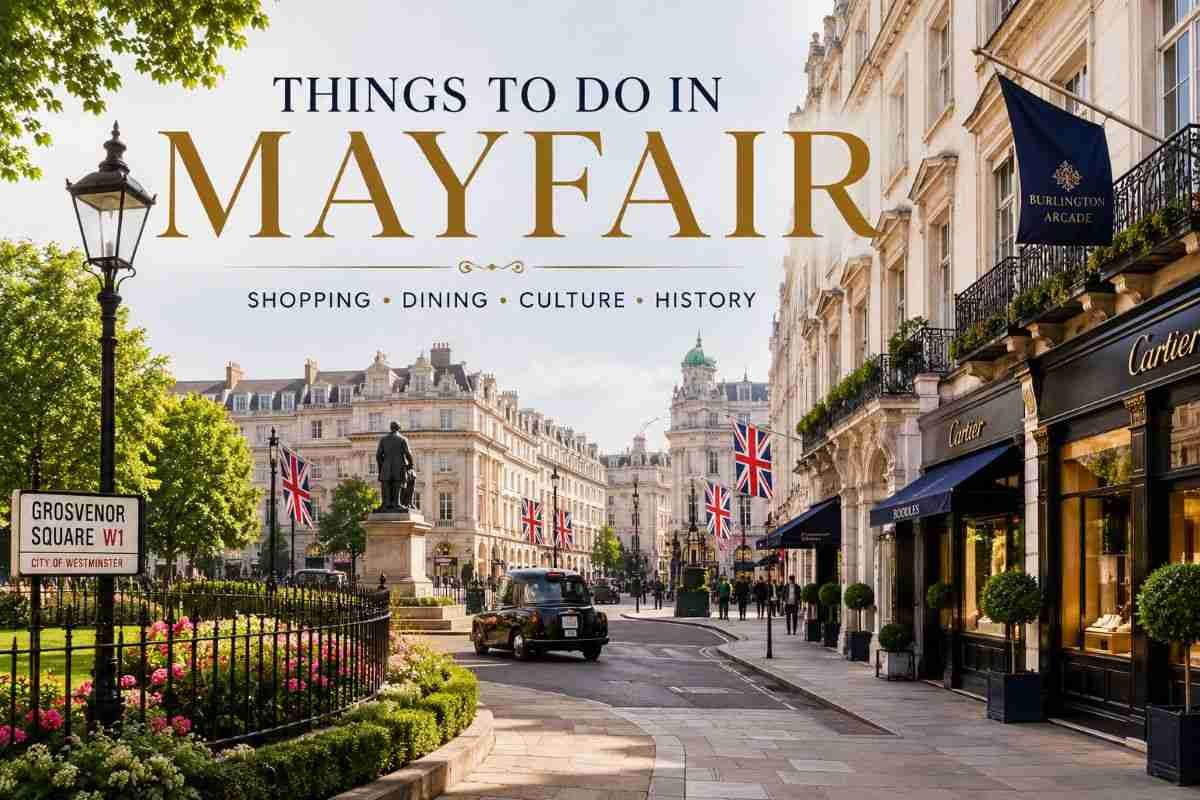
Mayfair has long been one of London’s most recognisable neighbourhoods. Known for elegant Georgian streets, world-famous shopping, luxury hotels and celebrated restaurants, it attracts visitors from across the UK and around the world. Yet beyond its reputation for wealth and designer boutiques, Mayfair offers plenty for anyone interested in history, art, architecture and some of the capital’s finest green spaces.
Located within the City of Westminster, Mayfair sits between Hyde Park, Soho, St James’s and Marylebone, making it an excellent base for exploring central London. A short walk can take you from quiet garden squares to internationally renowned galleries, Michelin-starred restaurants and some of Britain’s most prestigious shopping streets.
This guide explores the best things to do in Mayfair, highlighting major attractions alongside lesser-known places that deserve a visit. Whether you’re planning a day out, a weekend in London or simply looking for ideas after arriving on the Underground, you’ll find practical suggestions to help make the most of your time.
Why Visit Mayfair?
Mayfair combines history, culture and modern luxury within a surprisingly walkable area. Although it’s often associated with exclusive fashion brands and five-star hotels, much of the neighbourhood can be enjoyed without spending a fortune.
Reasons people visit Mayfair include:
- Luxury shopping along Bond Street
- Historic Georgian architecture
- World-class art galleries
- Fine dining and traditional British restaurants
- Royal parks within walking distance
- Historic pubs and hidden mews
- Luxury hotels and afternoon tea
- Easy access to neighbouring attractions
Because most attractions are close together, Mayfair is particularly suitable for exploring on foot.
Where is Mayfair?
Mayfair lies in the City of Westminster, central London.
Its approximate boundaries include:
- Oxford Street to the north
- Piccadilly to the south
- Hyde Park to the west
- Regent Street to the east
Nearby areas include:
- Soho
- St James’s
- Marylebone
- Fitzrovia
- Belgravia
- Knightsbridge
Its central location makes Mayfair one of London’s easiest districts to include in a sightseeing itinerary.
Getting to Mayfair
Several London Underground stations serve the area.
| Station | Underground Lines | Approximate Walking Distance |
| Bond Street | Elizabeth, Central, Jubilee | In the heart of Mayfair |
| Green Park | Jubilee, Piccadilly, Victoria | 5–10 minutes |
| Marble Arch | Central | Western edge of Mayfair |
| Oxford Circus | Bakerloo, Central, Victoria | Around 10 minutes |
| Hyde Park Corner | Piccadilly | Southern side |
Numerous Transport for London bus routes also pass through Park Lane, Piccadilly, Oxford Street and Regent Street.
If you’re exploring central London, Mayfair is easily reached on foot from Hyde Park, Buckingham Palace, Soho or Covent Garden.
Best Things To Do in Mayfair
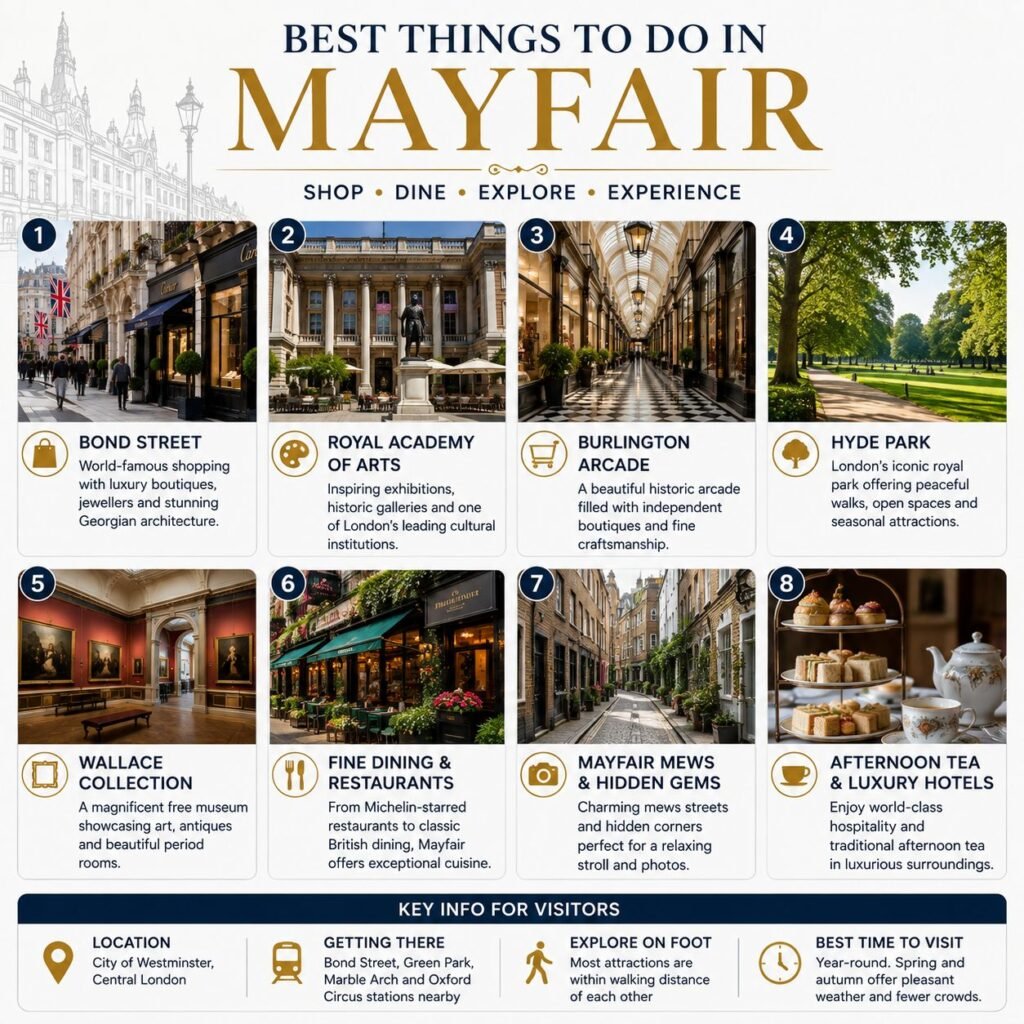
Walk Along Bond Street
No visit to Mayfair feels complete without spending time on Bond Street.
Divided into Old Bond Street and New Bond Street, it is recognised internationally for luxury fashion, jewellery and watchmaking. Flagship stores belonging to many of the world’s leading designer brands line the street, alongside historic jewellers and art dealers.
Even if shopping isn’t on your agenda, Bond Street is worth visiting simply to admire its elegant architecture and impressive window displays.
Look out for:
- Luxury fashion houses
- Historic jewellery retailers
- Public art installations
- Designer watch boutiques
- Seasonal decorations during Christmas
Bond Street also connects conveniently with nearby Burlington Gardens and Piccadilly.
Visit the Royal Academy of Arts
Located on Piccadilly, the Royal Academy of Arts is one of Britain’s leading art institutions.
Founded in 1768, it hosts changing exhibitions featuring internationally recognised artists alongside works from emerging talent.
Visitors can explore:
- Temporary exhibitions
- Historic galleries
- Architecture displays
- Sculpture collections
- The Royal Academy Shop
- Courtyard cafés
The annual Summer Exhibition remains one of London’s best-known art events, showcasing work by established and emerging artists.
Allow at least two hours if you plan to visit one of the major exhibitions.
Explore Burlington Arcade
Opened in 1819, Burlington Arcade remains one of London’s most elegant covered shopping arcades.
Stretching between Piccadilly and Burlington Gardens, the arcade is known for independent luxury retailers, specialist boutiques and traditional craftsmanship.
Its distinctive features include:
- Historic architecture
- Glass-roofed walkway
- Luxury accessories
- Antique jewellery
- British tailoring
- Fine leather goods
The arcade’s traditional Beadles continue to patrol the passageway, maintaining customs that have existed for generations.
Spend Time in Grosvenor Square
Grosvenor Square provides a quieter side of Mayfair.
Originally developed during the eighteenth century, the square has undergone extensive restoration while preserving its historic character.
Today, visitors can enjoy:
- Landscaped gardens
- Public seating
- Memorials
- Mature trees
- Peaceful walking routes
The square also has historical significance because it was once home to the former United States Embassy.
It’s an excellent place to pause between sightseeing and shopping.
Admire the Architecture
One of Mayfair’s greatest attractions isn’t a single landmark but the neighbourhood itself.
Walking through streets such as:
- South Audley Street
- Mount Street
- Carlos Place
- Berkeley Square
- Curzon Street
reveals elegant Georgian townhouses, period churches, embassies and beautifully restored historic buildings.
Many of these streets date back to the eighteenth century and retain much of their original character despite modern redevelopment.
Photography enthusiasts will find countless architectural details, including ornate doorways, iron balconies and traditional London mews.
Visit Berkeley Square
Berkeley Square is one of London’s best-known garden squares.
Surrounded by historic office buildings, private clubs and restaurants, it has featured in literature, music and popular culture for centuries.
Visitors often come here to:
- Relax on benches
- Enjoy the gardens
- Photograph historic buildings
- Experience one of London’s classic Georgian squares
Several mature London plane trees add to its distinctive appearance.
Discover Shepherd Market
Just south of Curzon Street lies Shepherd Market, one of Mayfair’s most characterful corners.
Originally established during the eighteenth century, this small network of streets and alleyways offers a different atmosphere from the area’s grand avenues.
Today you’ll find:
- Independent cafés
- Traditional pubs
- Boutique shops
- Restaurants
- Small hotels
Its pedestrian-friendly streets make it a pleasant place to explore at a slower pace.
Visit Handel Hendrix House
Music lovers should consider visiting Handel Hendrix House on Brook Street.
This museum occupies the former home of the composer George Frideric Handel and the neighbouring flat where guitarist Jimi Hendrix lived during the late 1960s.
Exhibitions explore the lives and work of both musicians, offering a unique link between two very different periods of musical history.
Highlights include:
- Restored historic rooms
- Original artefacts
- Musical exhibitions
- Guided tours
- Temporary displays
Explore Mount Street
Mount Street combines high-end shopping with notable architecture.
The street features:
- Luxury boutiques
- Designer fashion
- Art galleries
- Historic churches
- Independent cafés
The nearby Mount Street Gardens provide another peaceful green space tucked away from the busier shopping areas.
Top Attractions at a Glance
| Attraction | Best For | Typical Visit Time |
| Bond Street | Luxury shopping and architecture | 1–2 hours |
| Royal Academy of Arts | Art exhibitions | 2–3 hours |
| Burlington Arcade | Historic shopping | 30–60 minutes |
| Grosvenor Square | Relaxation and gardens | 30–45 minutes |
| Berkeley Square | Historic London | 30 minutes |
| Shepherd Market | Cafés, pubs and local atmosphere | 1 hour |
| Handel Hendrix House | Music history | 1–2 hours |
| Mount Street | Boutique shopping and architecture | 1 hour |
Art and Culture in Mayfair
Despite its reputation for luxury retail, Mayfair is also one of London’s leading destinations for art.
Alongside the Royal Academy, the area is home to numerous commercial galleries representing established and emerging artists. Cork Street, in particular, has been associated with the London art world for decades and remains an important destination for collectors and exhibition visitors.
Many galleries are free to enter, making them an excellent addition to a day exploring the neighbourhood without significantly increasing your budget.
Whether you’re interested in contemporary installations, classic paintings or sculpture, Mayfair offers a concentration of galleries that rivals many cultural districts elsewhere in the capital.
Enjoy the Green Spaces Around Mayfair
Although Mayfair is known for elegant streets and luxury shopping, it’s also within easy reach of some of London’s best parks and gardens. These green spaces offer a welcome break from the busy streets and are ideal for walking, picnics or simply taking in the surroundings.
Hyde Park
Bordering Mayfair to the west, Hyde Park is one of London’s eight Royal Parks and one of the city’s largest open spaces. It’s a popular destination throughout the year, with broad walking paths, tree-lined avenues and seasonal events.
Some of the highlights include:
- The Serpentine Lake
- The Diana, Princess of Wales Memorial Fountain
- Rose Garden
- Horse riding routes
- Boating during warmer months
- Open-air concerts and festivals
The park is particularly attractive in spring and autumn, when the gardens and tree-lined paths are at their best.
Green Park
Just south of Mayfair, Green Park offers a quieter atmosphere than neighbouring Hyde Park or St James’s Park.
Unlike many London parks, Green Park has relatively few formal flower beds. Instead, visitors come for its mature trees, wide lawns and peaceful walking routes. It also provides a pleasant route between Buckingham Palace, Piccadilly and Mayfair.
Mount Street Gardens
Often overlooked by visitors, Mount Street Gardens is a small public garden tucked behind Mount Street.
Surrounded by historic buildings and St George’s Church, it’s a peaceful spot to relax after exploring the surrounding shops and galleries.
Experience Mayfair’s Food Scene
Mayfair has earned an international reputation for its restaurants. While several hold Michelin stars, the neighbourhood also offers casual cafés, traditional pubs and long-established British dining rooms.
Traditional British Restaurants
Visitors looking for classic British cuisine will find several long-established restaurants serving seasonal menus inspired by British produce.
Expect dishes such as:
- Roast beef
- Fish and chips
- Steak and ale pie
- Dover sole
- Seasonal game
- British cheeses
Many restaurants focus on locally sourced ingredients and modern interpretations of traditional recipes.
International Cuisine
Mayfair is also one of London’s leading destinations for international dining.
The area includes restaurants specialising in:
- Italian
- French
- Japanese
- Chinese
- Indian
- Mediterranean
- Middle Eastern
- South American cuisine
Whether you’re planning a special celebration or a casual lunch, there’s an unusually wide choice within a relatively compact area.
Enjoy Afternoon Tea
Afternoon tea remains one of London’s best-known traditions, and Mayfair is home to several respected venues serving this classic British experience.
A traditional afternoon tea usually includes:
- Finger sandwiches
- Freshly baked scones
- Clotted cream
- Strawberry jam
- Cakes
- Pastries
- Loose-leaf tea
Many hotels also offer themed or seasonal afternoon teas, particularly during Christmas, Easter and summer.
Booking in advance is recommended, especially at weekends and during peak tourist seasons.
Visit Historic Pubs
While Mayfair is often associated with luxury, it also has several historic pubs that have welcomed Londoners for generations.
These pubs provide a more relaxed alternative to the area’s fine dining restaurants.
Many feature:
- Traditional interiors
- British ales
- Seasonal food
- Cosy fireplaces
- Outdoor seating during summer
They’re excellent places to stop after sightseeing or before an evening in the West End.
Explore Shepherd Market After Dark
As daylight fades, Shepherd Market takes on a different atmosphere.
Its narrow streets become busy with people enjoying dinner, drinks or evening walks.
Compared with neighbouring Soho, the area generally feels more relaxed while still offering a good selection of restaurants and bars.
Discover Mayfair’s Luxury Hotels
Even if you’re not staying overnight, many of Mayfair’s luxury hotels welcome non-residents to their restaurants, lounges and afternoon tea services.
Several have played host to royalty, politicians, actors and international visitors over many decades.
Visitors often enjoy:
- Elegant lounges
- Historic interiors
- Cocktail bars
- Spa facilities
- Fine dining
- Seasonal decorations
Many hotel lobbies are architectural attractions in their own right.
Go Gallery Hopping
Mayfair is one of London’s leading art districts.
In addition to the Royal Academy of Arts, dozens of commercial galleries showcase contemporary painting, sculpture, photography and mixed-media exhibitions.
Streets known for galleries include:
- Cork Street
- Albemarle Street
- Dover Street
- Bruton Street
Most commercial galleries offer free admission during opening hours, making gallery hopping an affordable activity.
Visit Local Churches
Several historic churches contribute to Mayfair’s architectural character.
Among the most notable is St George’s Hanover Square, completed in the early eighteenth century.
Its connections with London’s social history make it an interesting stop for visitors interested in architecture and heritage.
Explore the Hidden Mews
Behind many of Mayfair’s grand Georgian terraces lie attractive cobbled mews.
Originally built as stables and carriage houses, many have since been converted into private homes, offices or boutique businesses.
Walking through these quieter streets provides a glimpse of historic London away from the busier roads.
Some of the most picturesque areas can be found near:
- South Audley Street
- Grosvenor Square
- Berkeley Square
- Curzon Street
Free Things to Do in Mayfair
Exploring Mayfair doesn’t have to involve luxury shopping.
Here are several activities that cost little or nothing.
| Activity | Cost |
| Walk through Berkeley Square | Free |
| Visit Grosvenor Square | Free |
| Explore Shepherd Market | Free |
| Browse commercial art galleries | Usually free |
| Walk around Mount Street | Free |
| Admire Georgian architecture | Free |
| Visit Hyde Park | Free |
| Explore Green Park | Free |
A One-Day Walking Itinerary
If you’re visiting for a day, this route allows you to experience many of Mayfair’s highlights without rushing.
Morning
- Arrive at Bond Street Underground Station
- Walk along Bond Street
- Visit Burlington Arcade
- Explore the Royal Academy of Arts
Lunch
Choose one of the cafés or restaurants around Piccadilly or Mount Street.
Afternoon
- Walk through Berkeley Square
- Visit Grosvenor Square
- Explore Shepherd Market
- Visit Handel Hendrix House
Evening
Finish your visit with dinner in Mayfair before taking a short walk into Soho, Green Park or Piccadilly.
Things to Do in Mayfair with Children
Although Mayfair is often associated with luxury shopping, families will also find activities suitable for younger visitors.
Ideas include:
- Feeding ducks near the Serpentine in Hyde Park
- Family-friendly exhibitions at the Royal Academy (when available)
- Walking through Burlington Arcade
- Visiting nearby toy shops on Regent Street
- Ice cream in the parks during summer
- Seasonal Christmas lights around Bond Street
The neighbourhood’s compact layout makes it easy to explore on foot with children.
Best Time to Visit Mayfair
Each season offers a different experience.
| Season | What to Expect |
| Spring | Blooming parks, mild weather and outdoor cafés |
| Summer | Longer evenings and open-air events |
| Autumn | Colourful parks and comfortable walking weather |
| Winter | Christmas lights, festive shopping and seasonal decorations |
December is especially popular thanks to festive displays along Bond Street and nearby Regent Street.
Shopping Beyond Bond Street
While Bond Street attracts most visitors, Mayfair has several other shopping destinations worth exploring.
These include:
- Mount Street for luxury fashion and independent boutiques
- Burlington Arcade for jewellery and accessories
- South Molton Street near Oxford Street
- Piccadilly for specialist retailers
- Shepherd Market for independent shops
Together, these streets offer a broader shopping experience than designer labels alone.
Practical Tips for Visiting Mayfair
A little planning can help you make the most of your visit.
Wear Comfortable Footwear
Mayfair is best explored on foot. Although Underground stations are nearby, many of the area’s highlights are within walking distance of each other, and you’ll cover several miles if you include Hyde Park or neighbouring districts.
Book Popular Attractions in Advance
Temporary exhibitions at the Royal Academy of Arts, afternoon tea at leading hotels and sought-after restaurants often sell out, particularly during weekends, school holidays and the festive season.
Visit Early for Shopping
Bond Street and surrounding shopping streets tend to become busier from late morning onwards. Arriving earlier usually means quieter pavements and a more relaxed experience.
Allow Time to Wander
Some of Mayfair’s most interesting corners aren’t the famous landmarks but its quieter streets, hidden mews and small garden squares. Leaving room for unplanned discoveries often makes a visit more rewarding.
Nearby Attractions Worth Exploring
One of Mayfair’s strengths is its location. Several of London’s best-known attractions are within walking distance.
| Attraction | Approximate Walk from Mayfair | Why Visit |
| Hyde Park | 5–10 minutes | Royal Park, boating, memorials and walking trails |
| Green Park | 5 minutes | Peaceful park leading to Buckingham Palace |
| Buckingham Palace | 15–20 minutes | Official royal residence and Changing of the Guard (selected days) |
| Piccadilly Circus | 10 minutes | Famous London landmark and entertainment district |
| Soho | 10 minutes | Restaurants, theatres, cafés and nightlife |
| Oxford Street | Borders Mayfair | High street shopping |
| Regent Street | 10 minutes | Historic shopping street and flagship stores |
| St James’s | 10 minutes | Historic clubs, galleries and royal connections |
Exploring one or two neighbouring areas alongside Mayfair makes for a full day in central London.
Pros and Cons of Visiting Mayfair
| Pros | Cons |
| Excellent central London location | One of London’s more expensive neighbourhoods |
| Easy to explore on foot | Restaurants and hotels can require booking |
| Outstanding shopping | Luxury retailers may not appeal to every visitor |
| Historic architecture | Busy during weekends and festive periods |
| High concentration of galleries and restaurants | Limited free indoor attractions compared with some other areas |
Quick Summary
If you’re short on time, prioritise these experiences:
- Walk along Bond Street.
- Visit the Royal Academy of Arts.
- Explore Burlington Arcade.
- Relax in Grosvenor Square or Berkeley Square.
- Wander through Shepherd Market.
- Spend time in Hyde Park or Green Park.
- Visit Handel Hendrix House.
- Enjoy afternoon tea or dinner in one of Mayfair’s renowned restaurants.
Frequently Asked Questions
What is Mayfair best known for?
Mayfair is best known for luxury shopping, elegant Georgian streets, prestigious hotels, fine dining, art galleries and historic landmarks. Bond Street is particularly famous for designer fashion and jewellery.
Is Mayfair worth visiting if I’m not shopping?
Yes. Many of Mayfair’s attractions are unrelated to shopping. Visitors can enjoy public squares, Royal Parks, galleries, historic architecture, museums and traditional pubs without making a purchase.
How long should I spend in Mayfair?
A full day allows enough time to visit the main attractions, enjoy a meal and explore the surrounding streets. If you plan to visit galleries, afternoon tea or nearby parks, you could easily spend an entire weekend in the area.
Which Underground station is best for Mayfair?
Bond Street is the most convenient station for exploring the northern part of Mayfair. Green Park is ideal if you’re visiting Piccadilly, Shepherd Market or Hyde Park Corner.
Is Mayfair suitable for families?
Yes. Families can enjoy nearby parks, galleries, quieter garden squares and easy walking routes. The neighbourhood’s central location also makes it convenient for visiting other London attractions.
Are there free things to do in Mayfair?
Yes. Walking through Berkeley Square, Grosvenor Square, Shepherd Market, Hyde Park and Green Park is free. Many commercial art galleries also welcome visitors without an admission charge.
When is the best time to visit Mayfair?
Spring and autumn offer pleasant weather for walking. December is especially popular because of the Christmas lights and festive window displays, while summer provides longer evenings for outdoor dining and park visits.
Is Mayfair easy to reach by public transport?
Yes. Bond Street, Green Park, Marble Arch, Oxford Circus and Hyde Park Corner Underground stations all provide convenient access, while numerous bus routes serve the surrounding roads.
Final Thoughts
Mayfair is often associated with luxury, but that’s only part of its appeal. Its streets reveal centuries of London history, from Georgian architecture and historic squares to respected galleries, independent cafés and peaceful parks. You don’t need to spend heavily to enjoy the neighbourhood—many of its most memorable experiences come from simply walking its streets, exploring its hidden corners and taking time to appreciate the character that has made Mayfair one of London’s most enduring destinations.
Whether you’re planning your first visit or returning to see more of central London, Mayfair is easily combined with nearby areas such as Soho, St James’s, Hyde Park and Marylebone, making it an excellent starting point for exploring the capital at your own pace.